React Native App Development Israel

React Native app development in Israel: Hebrew-ready iOS and Android apps built on your team's React skills.

Android holds about 67% of Israeli mobile use and iOS about 33% (StatCounter, July 2026), so most products need both stores. We build React Native apps with mirrored Hebrew RTL screens, English alongside, and local payment and sign-in flows, working with Israeli teams remotely from India.

Built For Israeli Users

Two app stores, two text directions, one TypeScript codebase.

RTL From Day One

Hebrew layouts mirrored through I18nManager, with bidi-safe text for mixed Hebrew, English and numbers.

Native When Needed

Swift or Kotlin modules for a payment SDK or device feature JavaScript cannot reach; everything else stays shared.

About The Service

Israeli users expect apps in Hebrew, often with English beside it, on whichever store their phone uses. React Native renders real platform UI from TypeScript, so one team ships both language builds to the App Store and Google Play using the React skills your web team already has.

Who It Suits

Israeli startups and scale-ups in SaaS, fintech and cyber, corporate R&D teams adding a companion app, and SMEs that need one app on both stores.

What You Get

A typed React Native codebase with Hebrew RTL and English, Israeli payment and sign-in integrations, store-ready iOS and Android builds, and handover docs.

Where It Stops

Games, AR and apps built around widgets, car apps or heavy background media usually suit native better, as can an Android-only build for a mostly Android audience.

Business Benefits

Outside capacity that your own React team can still own.

For Israeli teams adding outside developers, the case is continuity as much as code: one codebase, one release rhythm and documentation that lets your in-house React developers review, extend and take over the app at any point.

One codebase for iOS and Android, so a fix to Hebrew copy, checkout or onboarding reaches every Israeli user in the same release.

Your in-house React and TypeScript developers can read and review the app, so outside capacity adds to your team instead of replacing it.

EAS Update ships JavaScript fixes between store releases, within Apple and Google policies, so corrected Hebrew copy or revised consent wording reaches users without waiting for review.

Maintained libraries cover Apple Pay, Google Pay, maps and push notifications, and Israeli gateway SDKs can be wrapped where no package exists.

Our Services

React Native services for Hebrew-first apps, new builds and takeovers.

Need extra hands on an existing codebase instead? See hire React Native developers. For the web side of a shared React product, see React.js development in Israel.

New Hebrew & English Apps

Greenfield iOS and Android apps in TypeScript with RTL-aware navigation, Hebrew and English strings, DD/MM/YYYY dates and state management sized to the app.

Expo & EAS Workflows

Expo projects with EAS Build, Submit and Update, so builds, Hebrew store listings and submissions run from CI instead of one developer's laptop.

Israeli Payments & Wallets

Card checkout with installments (tashlumim) through gateways such as Tranzila, Cardcom, Grow or Hyp, plus Apple Pay, Google Pay and Bit where your gateway supports it.

Sign-In, OTP & Messaging

SMS one-time-code login, biometrics, secure token storage, Teudat Zehut check-digit validation, and WhatsApp or push marketing only for users who opted in separately.

Upgrades & RTL Fixes

Moving older apps to the New Architecture and Hermes, replacing abandoned libraries, and fixing broken RTL layouts, unmirrored icons and slow lists.

Release & Ongoing Support

TestFlight and Play Console testing tracks, store review fixes, crash monitoring and a release calendar planned around Israeli holidays.

Framework Comparison

React Native, Flutter or native for an Android-majority market?

We weigh your team's skills, how much of the UI must mirror for Hebrew, and how far the app reaches into device hardware, and recommend Flutter or native when either fits better. Compare Flutter app development, Android app development and iOS app development in Israel.

When React Native fits

Your team or web product already runs on React and TypeScript, you want logic shared with a Hebrew/English web app, and the app uses standard UI and device features.

When Flutter fits

You want an identical custom-drawn UI on every platform, heavy animation, or one Dart codebase that can also target desktop, and there is no React code to reuse.

When native iOS or Android fits

The app depends on widgets, watch or car apps, AR or low-latency media, or you launch Android-first for a mostly Android audience with platform-specific UX.

When a web app is enough

If users need no push, device hardware or store presence, a bilingual responsive React or Next.js web app may serve them with one fewer product to maintain.

Development Process

From discovery to store release: our React Native process for Israeli teams.

Each phase ends with a build you can install on real phones in Hebrew and English. Reviews fall inside the shared Israeli and Indian working day, with Monday to Thursday common to both weeks.

Discovery & Platform Check

We map user flows, languages, payment and sign-in providers, and every native feature up front, and confirm React Native fits before code is written.

RTL UX for Both Platforms

Designs cover mirrored Hebrew layouts, direction-aware icons and iOS versus Android conventions for back navigation, permission prompts and typography.

Typed Foundation

TypeScript, ESLint, navigation, i18n with Hebrew and English resources, environment configs and a shared API layer are set up in the first sprint.

Feature Sprints

Features land in short sprints with internal builds on TestFlight and Play testing tracks, timed so your team reviews them on the same working day.

Privacy & Device Testing

Jest and React Native Testing Library cover logic, with device checks in both text directions and reviews of consent, access logging and data handling.

Store Release & Updates

Hebrew and English store listings, privacy declarations and review fixes, with releases kept clear of the autumn holiday cluster, then OTA patches after launch.

Work Showcase

Portfolio patterns that translate to Israeli products.

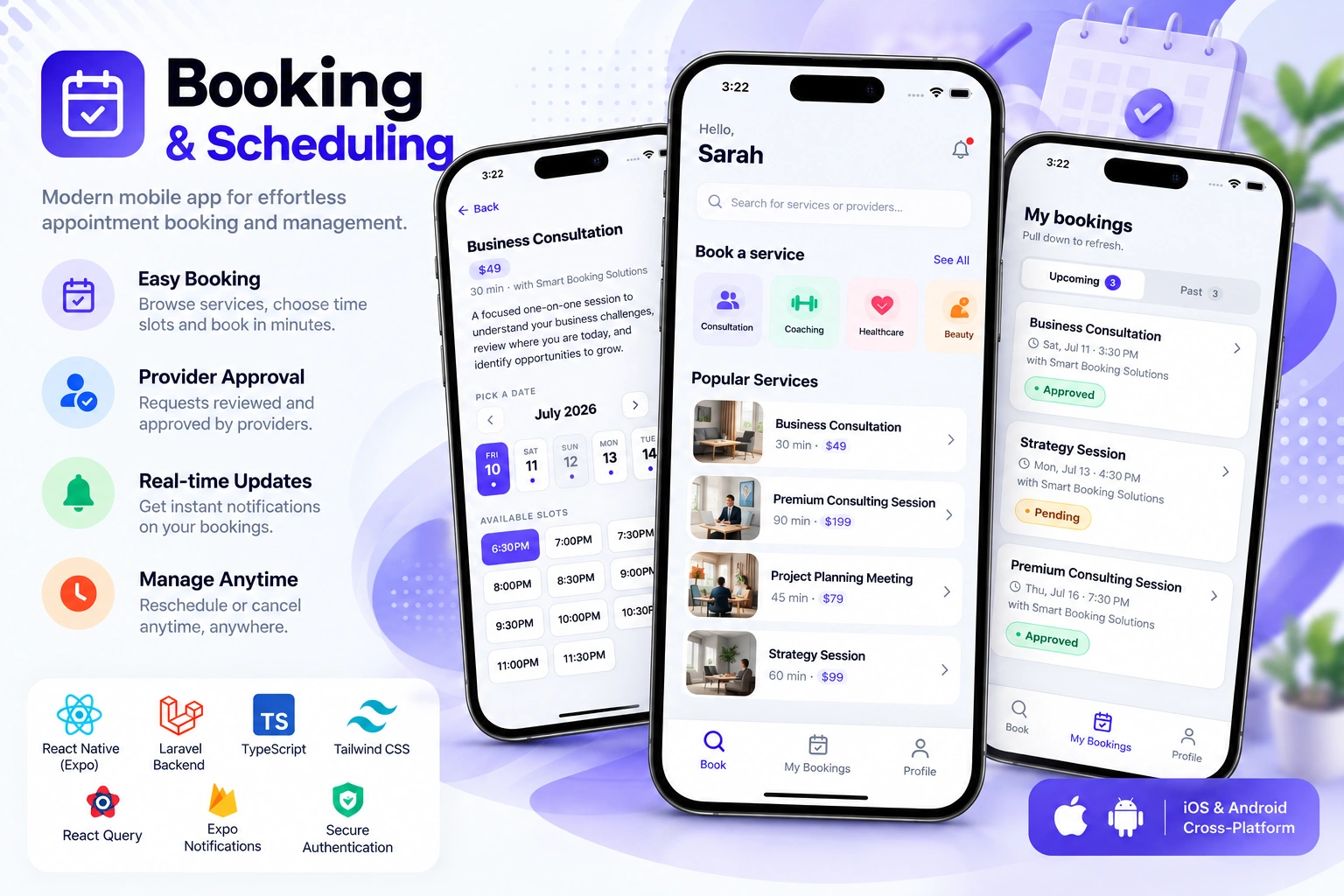
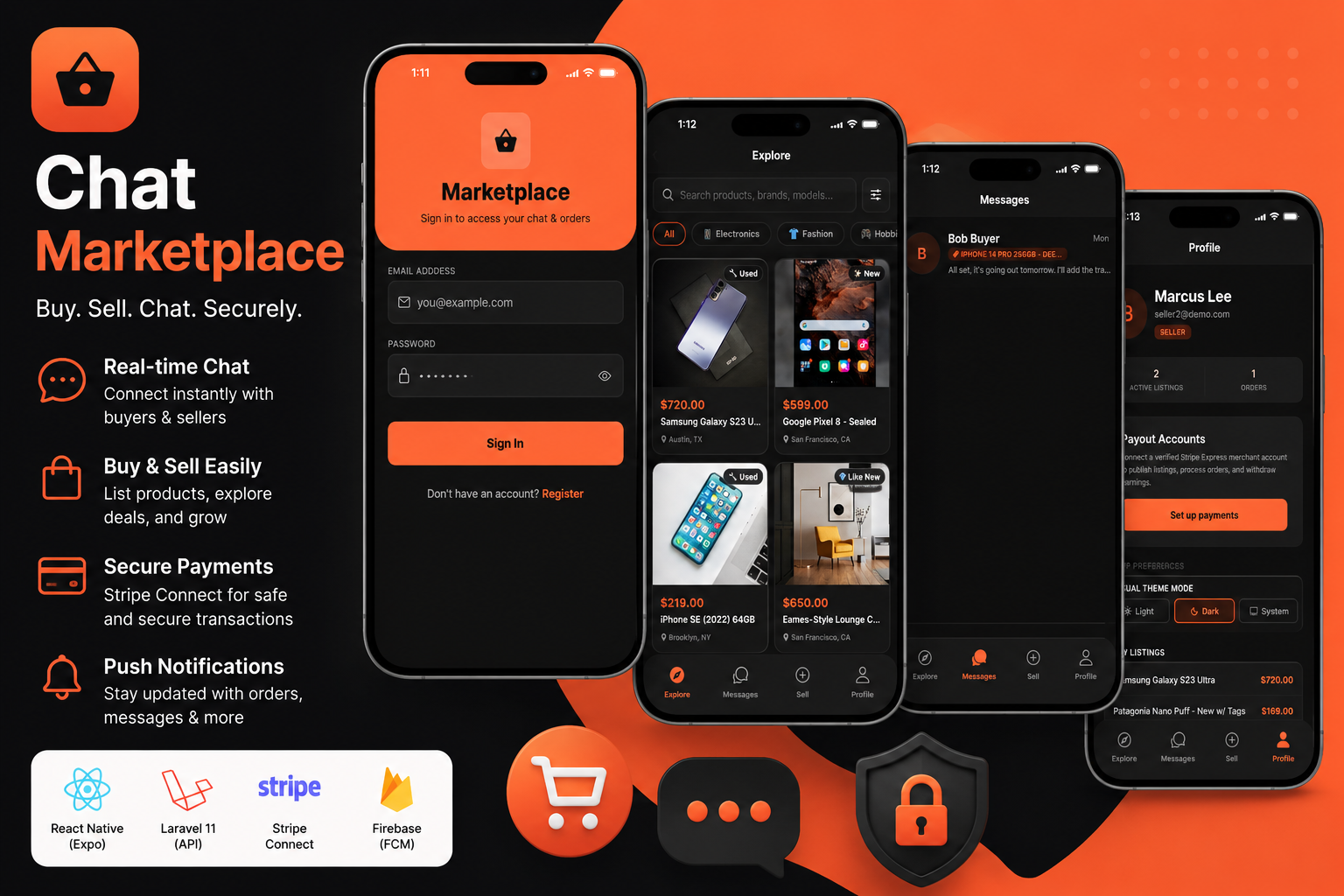
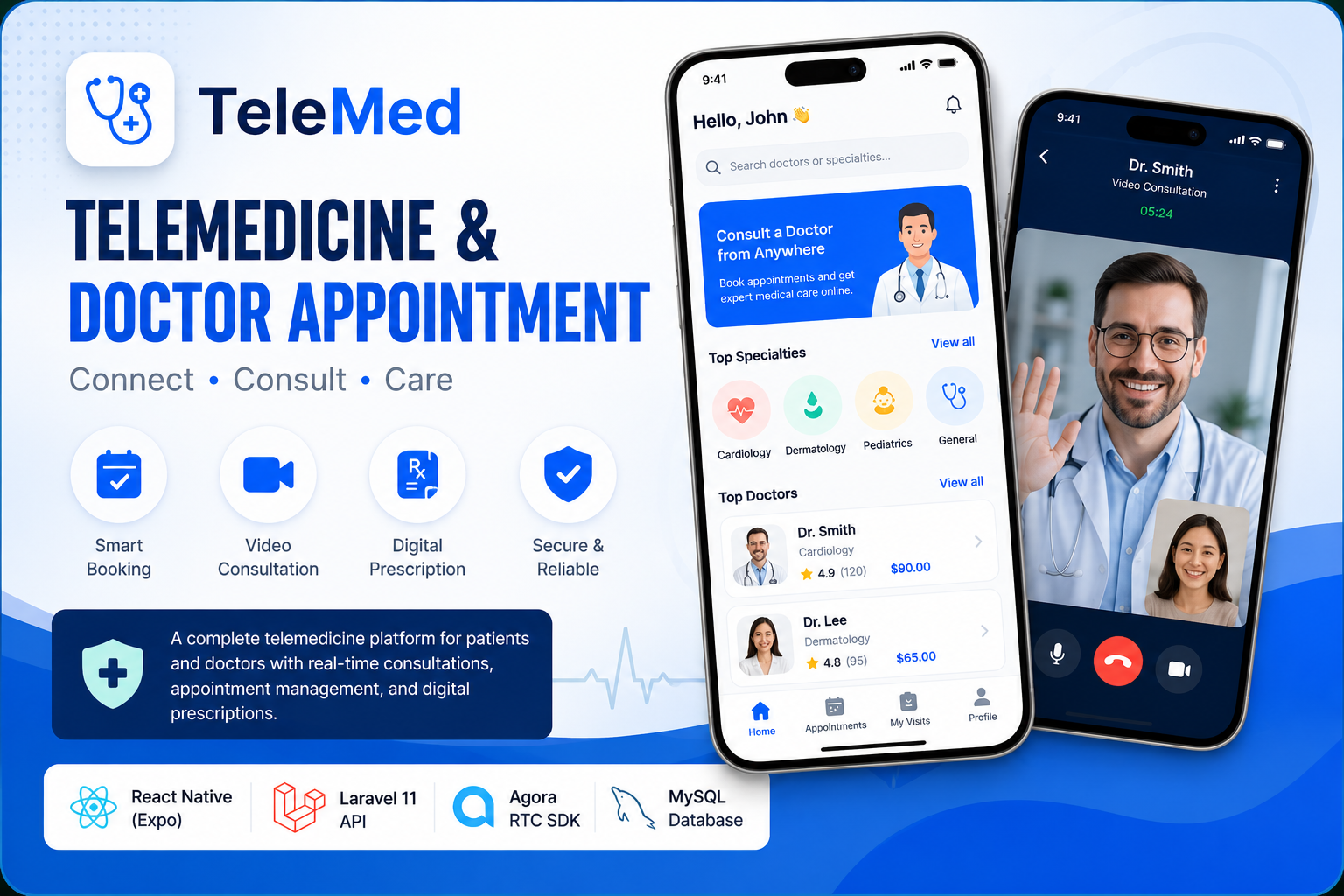
Three React Native builds on Laravel APIs. None were built for Israeli clients, but each pattern maps to products Israeli teams commonly ship: marketplaces, digital health and service booking.

  • Real-time chat
  • Product listings
  • Order management
  • Stripe Connect
Marketplace · iOS & Android

Chat Marketplace App

A peer-to-peer marketplace with real-time buyer-seller chat, listings, orders and Stripe Connect payments on a Laravel API; an Israeli build would swap in a local gateway.

View case study : Chat Marketplace App
  • Doctor discovery
  • Video consultations
  • Digital prescriptions
  • Appointment scheduling
Healthcare · Mobile Apps

Telemedicine Appointment & Virtual Healthcare Platform

Separate patient and doctor apps on a Laravel REST API with JWT authentication, booking, Agora video consultations and digital prescriptions, a fit for digital-health products.

View case study : Telemedicine Appointment & Virtual Healthcare Platform
  • Service browsing
  • Appointment booking
  • Booking management
  • Real-time updates
Service Booking · Mobile App

Booking Mobile App

An Expo and TypeScript app where customers browse services, book and manage appointments and get real-time updates, with Laravel Sanctum authentication; it suits clinics and salons.

View case study : Booking Mobile App
Start Your Project

A Hebrew-first React Native app on your roadmap, or one to take over?

Send the flows, designs or repository you have. We will tell you whether React Native suits it, how much RTL, gateway and native work is involved, and how a first release could be split between our team and yours.

FAQ

Questions Israeli teams ask before outsourcing a React Native app.

How does React Native handle Hebrew and right-to-left layouts? +

React Native supports RTL through I18nManager, which mirrors flexbox layouts when the app runs in Hebrew or Arabic. Switching direction takes effect after an app reload, so we plan language switching around that. We also use start/end styles instead of left/right, mirror direction-dependent icons and test mixed Hebrew, English and number input on both platforms.

Can our React web app and React Native app share code? +

Yes, within limits. TypeScript types, API clients, validation schemas, state logic and i18n resources, including your Hebrew and English strings, can live in a shared package used by both. Screens are written separately, because React Native renders native views rather than HTML, but your web developers will recognize the components, hooks and patterns. We usually set this up as a monorepo so an API change reaches both products together.

Can we push urgent fixes without waiting for store review? +

For JavaScript-only changes, yes. EAS Update or a similar over-the-air service delivers fixes such as corrected Hebrew copy, updated consent text or a broken validation rule to installed apps, within Apple and Google policies. Changes to native code, permissions or the app's core purpose still go through store review, so we plan those as regular releases.

How do you handle Amendment 13 and marketing consent in the app? +

We build with Israel's Privacy Protection Law (Amendment 13) and the Data Security Regulations in mind: specific consent screens instead of bundled acceptance, role-based access and access logs on the backend, and documented incident procedures. Marketing by SMS or email gets its own opt-in, separate from the terms, as section 30A of the Communications Law requires, and we apply the same separate consent to WhatsApp messages. Your counsel confirms the legal position.

Our React Native app was built by another team. Can you take it over? +

Yes. We start with a code audit of the React Native version, outdated libraries, RTL handling, build setup and crash reports, and document what we find. Upgrades are then planned in steps so the app keeps shipping, and your developers keep full access to the repository throughout.

How do working hours line up with Israel? +

India is 2.5 to 3.5 hours ahead of Israel depending on daylight saving, so most of the Israeli working day overlaps ours. Monday to Thursday is shared by both working weeks; we agree how Sunday requests and short Fridays are covered, and plan releases around Israeli holidays.

Case Studies

Related Projects