React Native App Development

React Native app development services for teams that build in React and need iOS and Android apps.

We build React Native apps for companies that already work in JavaScript or React: one typed codebase for both stores, native modules where the device demands them, and a release pipeline your team can keep running.

Where React Native Fits

Best when your product already speaks React and needs both app stores.

Shared Logic

API clients, types and validation shared across iOS, Android and your React web code.

Native When Needed

Swift or Kotlin modules for what JavaScript cannot reach, with everything else in one codebase.

About The Service

React Native renders real platform UI components from TypeScript, so one team can ship to the App Store and Google Play while reusing the patterns, libraries and people behind your React web product.

Who It Suits

Startups and product teams with React or Node.js skills that need an app on both stores without staffing two separate native teams.

What You Get

A typed React Native codebase, integration with your backend APIs, store-ready iOS and Android builds, and documentation for handover.

Where It Stops

Games, 3D-heavy apps and products built around deep OS integrations usually suit native or another framework better. We compare the options below.

Business Benefits

Why product teams choose React Native for mobile.

The case for React Native is mostly organizational: one team and one release rhythm for both platforms, built on the JavaScript ecosystem your developers already know.

One codebase for iOS and Android, so features, fixes and copy changes land on both platforms in the same release.

Hire from the large React and TypeScript talent pool instead of building separate Swift and Kotlin teams.

Over-the-air updates such as EAS Update ship JavaScript fixes between store releases, within Apple and Google policies.

Maintained libraries for navigation, maps, payments and notifications, plus Expo modules, cover most app needs without custom native code.

Our Services

React Native development services for new and existing apps.

Need extra hands on an existing codebase instead? See hire React Native developers. For the web side of a shared React product, see React.js development.

New React Native Apps

Greenfield iOS and Android apps in TypeScript with React Navigation and state management sized to the app, from Context to Redux Toolkit or Zustand.

Expo & EAS Workflows

Expo projects with EAS Build, Submit and Update, so builds and store submissions run from CI instead of one developer's laptop.

Native Modules & Device APIs

Camera, maps, push notifications, payments, Bluetooth and biometrics, with custom Swift or Kotlin modules when no maintained library fits.

API & Backend Integration

REST or GraphQL APIs, token authentication, offline caching and secure storage, plus Laravel backends from our own team when you need one.

Upgrades & Performance Fixes

Moving older apps to the New Architecture and Hermes, replacing abandoned libraries, and fixing slow lists, startup time and memory use.

Release & Ongoing Support

TestFlight and Play Console testing tracks, store review fixes, crash monitoring and a steady release cadence after launch.

Framework Comparison

Is React Native the right framework for your app?

We weigh your team's skills, your UI and how far the app reaches into device hardware, and recommend Flutter or a native build when either is the better match. Compare Flutter app development, Android app development and iOS app development.

When React Native fits

Your team or web product already uses React and TypeScript, you want shared logic with the web, and the app relies on standard UI and common device features.

When Flutter fits

You want an identical custom-drawn UI on every platform, heavy animation, or one Dart codebase that can also target desktop, with no React code to reuse.

When native iOS or Android fits

The app depends on platform features such as widgets, watch or car apps, AR, or low-latency media, or you launch on one platform with platform-specific UX.

When a web app is enough

If users need no push notifications, device hardware or store presence, a responsive React or Next.js web app may serve them with one fewer product to maintain.

Development Process

How we build and release React Native apps.

Each phase ends with something you can install and test on real devices, not just a status report.

Discovery & Platform Check

We map user flows, backend needs and every native feature up front, and confirm React Native is the right fit before code is written.

UX for Both Platforms

Designs follow iOS and Android conventions where they differ: navigation, back behavior, permission prompts and system typography.

Typed Foundation

TypeScript, ESLint, navigation, environment configs and a shared API layer are set up in the first sprint, before feature work starts.

Feature Sprints

Features land in short sprints with internal builds on TestFlight and Play testing tracks, so you review on real phones.

Automated & Device Testing

Jest and React Native Testing Library cover logic and components, plus manual checks across iOS and Android devices and OS versions.

Store Release & Updates

App Store and Play Console listings, privacy declarations and review fixes, then OTA patches and versioned releases after launch.

Work Showcase

React Native apps from our portfolio.

Three React Native builds, each backed by a Laravel API: a peer-to-peer marketplace, a two-sided healthcare platform and a service booking app.

  • Real-time chat
  • Product listings
  • Order management
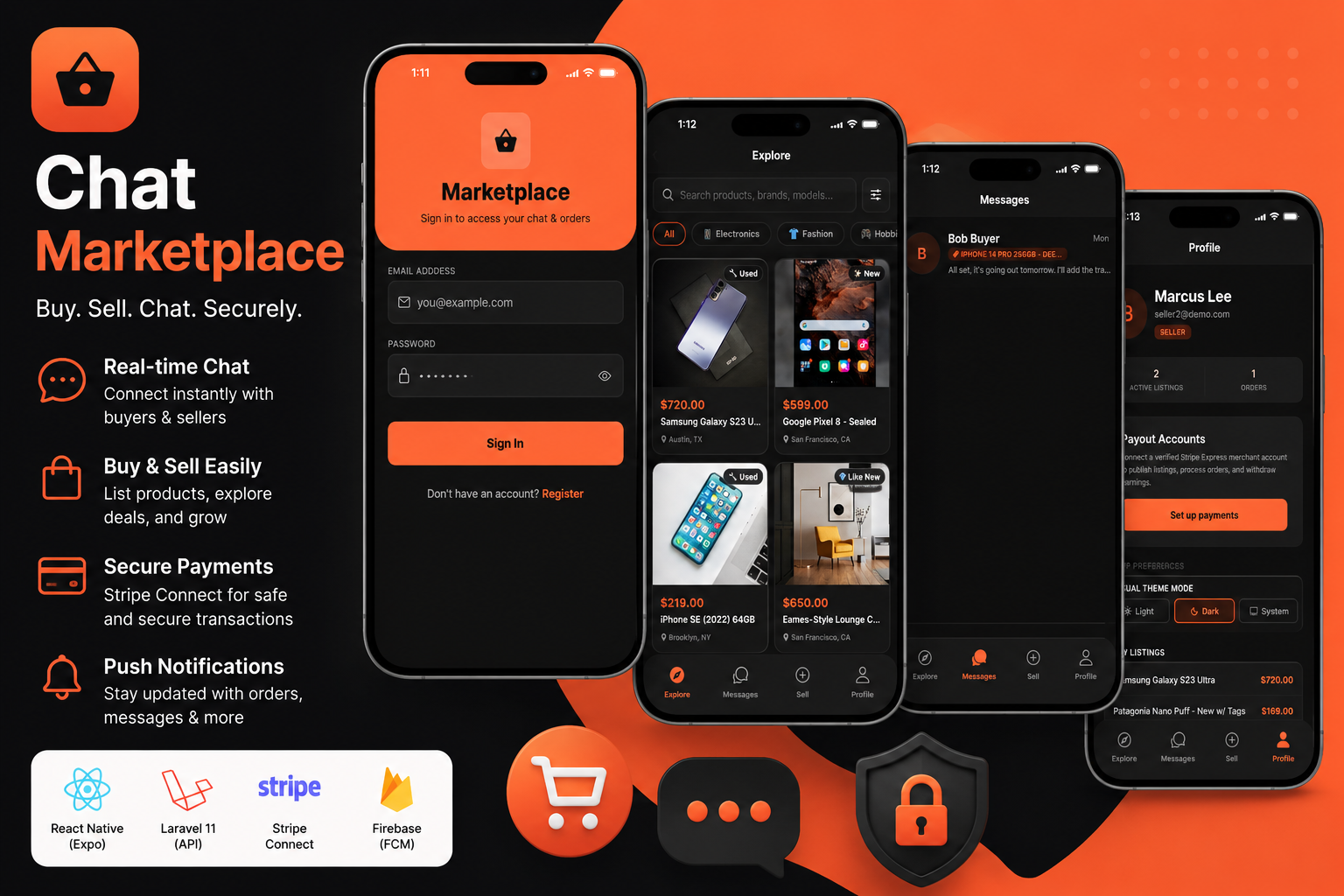
  • Stripe Connect
Marketplace · iOS & Android

Chat Marketplace App

A peer-to-peer marketplace app where buyers and sellers chat in real time, create listings, manage orders and pay through Stripe Connect, built on a Laravel API.

View case study : Chat Marketplace App
  • Doctor discovery
  • Video consultations
  • Digital prescriptions
  • Appointment scheduling
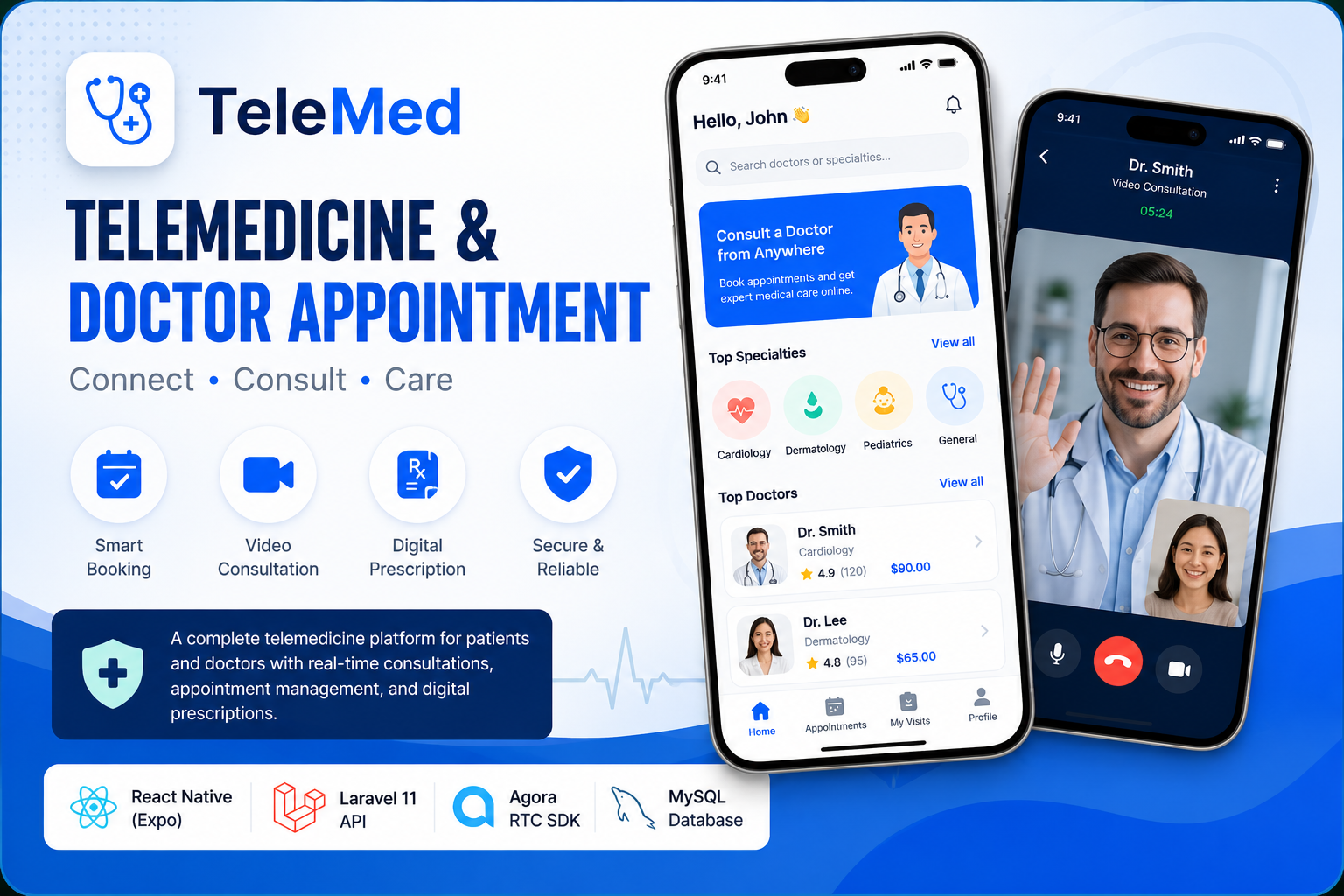
Healthcare · Mobile Apps

Telemedicine Appointment & Virtual Healthcare Platform

Separate React Native apps for patients and doctors on a Laravel REST API: doctor discovery, appointment booking, Agora video consultations and digital prescriptions.

View case study : Telemedicine Appointment & Virtual Healthcare Platform
  • Service browsing
  • Appointment booking
  • Booking management
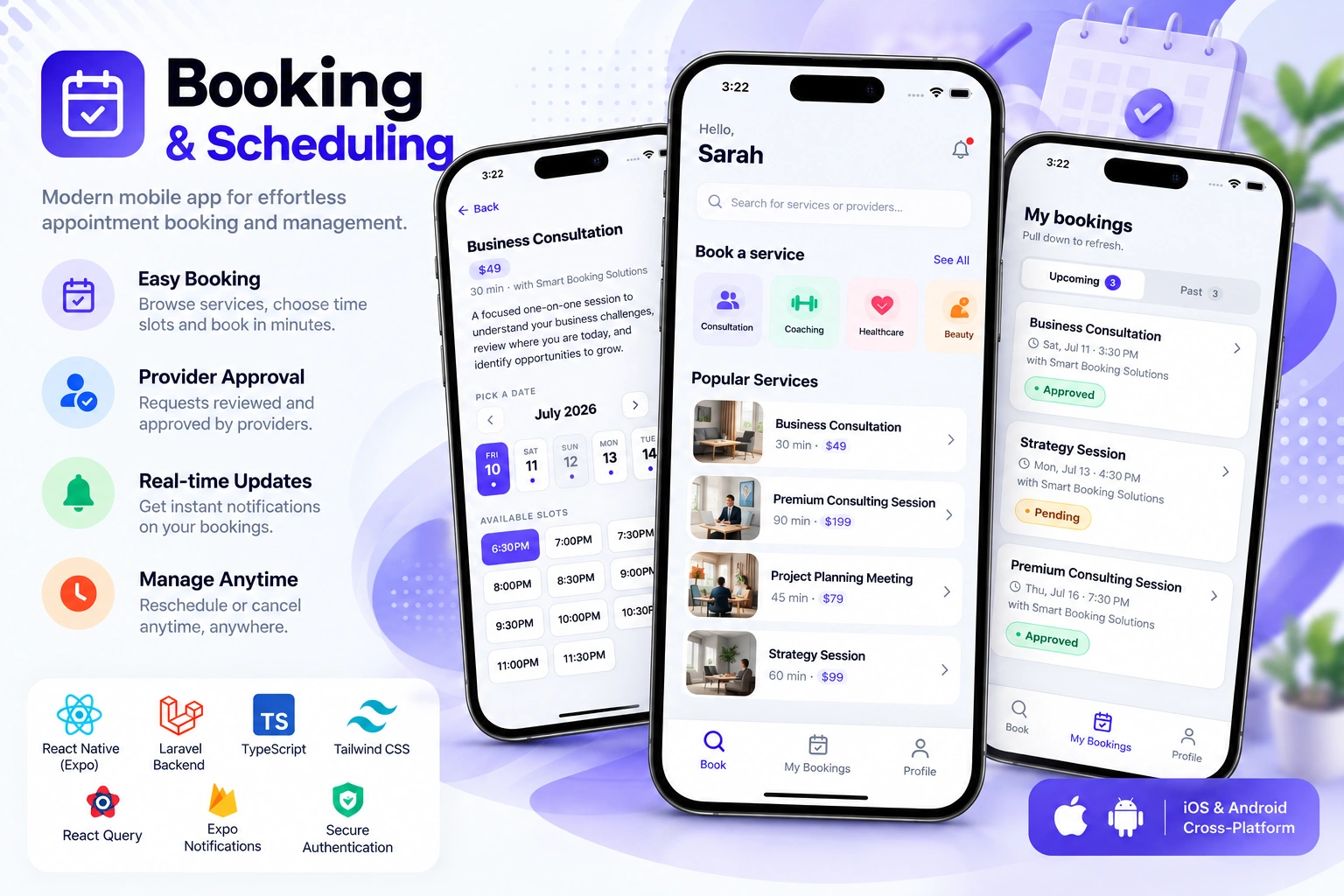
  • Real-time updates
Service Booking · Mobile App

Booking Mobile App

An Expo and TypeScript app where customers browse services, book and manage appointments and get real-time updates, using Laravel Sanctum authentication.

View case study : Booking Mobile App
Start Your Project

Planning a React Native app, or rescuing an existing one?

Share your feature list, designs or current repository. We will tell you whether React Native suits it, what the native pieces involve, and how we would structure the first release.

FAQ

React Native app development FAQs.

Will a React Native app feel native to users? +

For most business apps, yes. React Native renders the platform's own UI components rather than a web view, and with the New Architecture and the Hermes engine, navigation, scrolling and startup feel close to native. Graphics-heavy apps such as games are the main exception.

Should we use Expo or bare React Native? +

We start most new projects with Expo, because EAS Build, Submit and Update simplify releases and prebuild still allows custom native code. Bare React Native makes more sense when React Native screens are embedded in an existing native app or a native SDK has unusual build requirements.

Our React Native app is several versions behind. Can you upgrade it? +

Yes. We start with a code audit of the React Native version, outdated or unmaintained libraries, build setup and crash reports. Upgrades are then planned in steps so the app keeps shipping while it is modernized.

How much code is shared between iOS and Android? +

Usually most of it: screens, business logic and API calls are written once. Platform-specific code is limited to areas such as permissions, notification setup, payment sheets and any custom native modules.

Can we share code with our React web app? +

Yes, at the logic level. Types, API clients, validation and state management can live in a shared package used by both apps. UI components usually stay separate, because native screens and browser layouts follow different patterns.

Do you handle App Store and Google Play submission? +

Yes. We prepare store listings, privacy and data safety declarations, and builds for TestFlight and Play testing tracks, then work through review feedback until the app is approved. Later updates follow the same release pipeline.

Case Studies

Related Projects