React Native App Development USA

React Native app development company for US teams that build in React and need iOS and Android at launch

iPhones lead US mobile use, but about four in ten users are on Android. SofttechOver builds React Native apps that reach both stores from one TypeScript codebase, for US startups, SaaS companies and service businesses whose web product and engineers already work in React.

Built for the US Market

One release reaches iPhone users and the Android share you cannot skip.

Pay and Link Accounts

Stripe with Apple Pay and Google Pay, PayPal checkout, Stripe Connect payouts and Plaid bank linking, wired to your backend.

Text and Notify

Push notifications, in-app messaging and SMS fallback for order and booking updates, with opt-in and STOP handling.

About The Service

React Native renders real iOS and Android components from TypeScript. For a US company that already ships a React web app, that means one team, one review process and one release train for the App Store and Google Play, and code your in-house engineers can read on day one.

Who It Suits

US SaaS companies adding a mobile companion, funded startups launching on both stores, and service businesses whose customers book, pay and get updates by phone.

What You Get

A typed codebase in your GitHub, store builds under your own Apple and Google accounts, integration with your APIs, and handover notes your US team can work from.

Where It Stops

Games, AR and apps built around Apple Watch, CarPlay or heavy background audio usually suit native Swift or Kotlin better. We say so in discovery.

Business Benefits

What React Native gives a US product team.

In a market where iOS holds a majority and Android is still too large to leave out, React Native lets one team ship both versions on the same day and keep them in step, using the JavaScript skills many US web teams already have.

iPhone and Android users get the same features on the same day, instead of Android trailing an iOS-first launch by months.

Your US React and TypeScript engineers can review, extend and eventually own the app without hiring separate Swift and Kotlin specialists.

EAS Update ships JavaScript fixes between store reviews, within Apple and Google policies, which matters when a bug lands in launch week or before Black Friday.

Maintained SDKs for Stripe, Plaid, maps and notifications, plus Expo modules, cover most US app needs without custom native code.

Our Services

React Native development services for US startups and product teams

Need to extend an existing team instead? See hire React Native developers. For the web side of a shared product, see React.js development in the US or Next.js development.

New React Native Apps

iOS and Android apps in TypeScript with US date, time and ZIP code conventions, optional Spanish UI, and a Laravel API from our team if needed.

Expo & EAS Workflows

Expo projects with EAS Build, Submit and Update wired into CI, so store submissions run under your accounts instead of from one developer's laptop.

US Payments & Messaging

Stripe, Apple Pay, Google Pay and PayPal checkout, Stripe Connect payouts, and SMS updates from A2P 10DLC-registered numbers with opt-in and STOP handling.

Accessibility & Privacy Flows

VoiceOver and TalkBack labels, dynamic type and contrast checked against WCAG 2.1 AA, plus consent, data access and in-app account deletion flows.

Takeovers & Upgrades

Apps inherited from a previous vendor: code audit, move to the New Architecture and Hermes, replacing abandoned libraries and fixing slow screens.

Release & Ongoing Support

TestFlight and Play testing tracks, store review fixes, crash monitoring and releases planned around US holidays and your marketing dates.

Framework Comparison

Is React Native the right choice for your US app?

Most US launches need an iPhone app on day one and an Android app soon after, which is why cross-platform is often the default. We still recommend Flutter or native when that serves you better. Compare Flutter app development, iOS app development and Android app development in the US.

When React Native fits

Your web product and engineers already use React and TypeScript, you want both stores at launch, and the app is built on forms, lists, maps, payments and notifications.

When Flutter fits

You want an identical branded UI on every device, heavy custom animation, or one Dart codebase that may later target desktop, and there is no React code to reuse.

When native iOS or Android fits

An iPhone-only launch that leans on Apple Watch, widgets, CarPlay or HealthKit, or an Android app for company-managed rugged devices and scanners.

When a web app is enough

If users need no push, device hardware or store listing, a responsive React or Next.js web app serves them, and ADA web accessibility work stays in one product.

Development Process

How we build and release React Native apps for US clients

Each phase ends with a build you can install on your own iPhone or Android phone, usually waiting for you when your US workday starts.

Discovery & Platform Check

We map user flows, native features and the data the app touches, flagging where HIPAA, COPPA or state privacy laws may apply, before code is written.

UX for Both Platforms

Designs follow iOS and Android conventions where they differ: navigation, back behavior, permission prompts, and system font sizes for accessibility.

Typed Foundation

TypeScript, ESLint, navigation, environment configs and a shared API layer are set up in the first sprint, before feature work starts.

Feature Sprints

Short sprints with builds on TestFlight and Play testing tracks; demos run at the start of the East Coast day, with recorded walkthroughs for Pacific teams.

Automated & Device Testing

Jest and React Native Testing Library cover logic and components, with manual checks on iOS and Android devices, VoiceOver and TalkBack.

Store Release & Updates

App Store privacy labels, Play Data safety forms and review fixes under your accounts, then OTA patches and versioned releases after launch.

Work Showcase

Portfolio apps that mirror common US product patterns

Three React Native builds on Laravel APIs, covering patterns US products ask for most: a Stripe Connect marketplace, a two-sided telehealth platform and a service booking app.

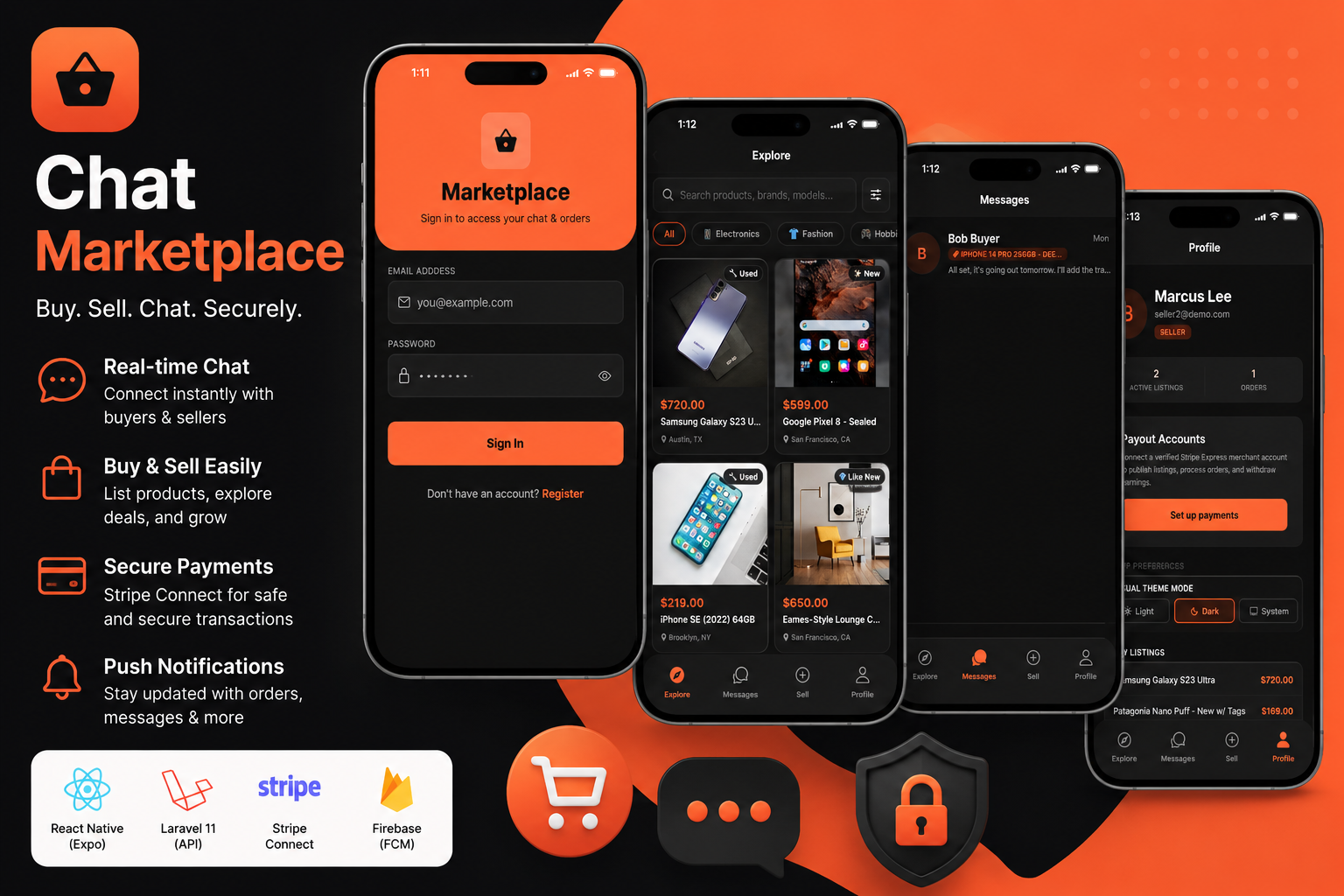
  • Real-time chat
  • Product listings
  • Order management
  • Stripe Connect
Marketplace · iOS & Android

Chat Marketplace App

A peer-to-peer marketplace where buyers and sellers chat in real time, list products, manage orders and pay through Stripe Connect, all running on a Laravel API.

View case study : Chat Marketplace App
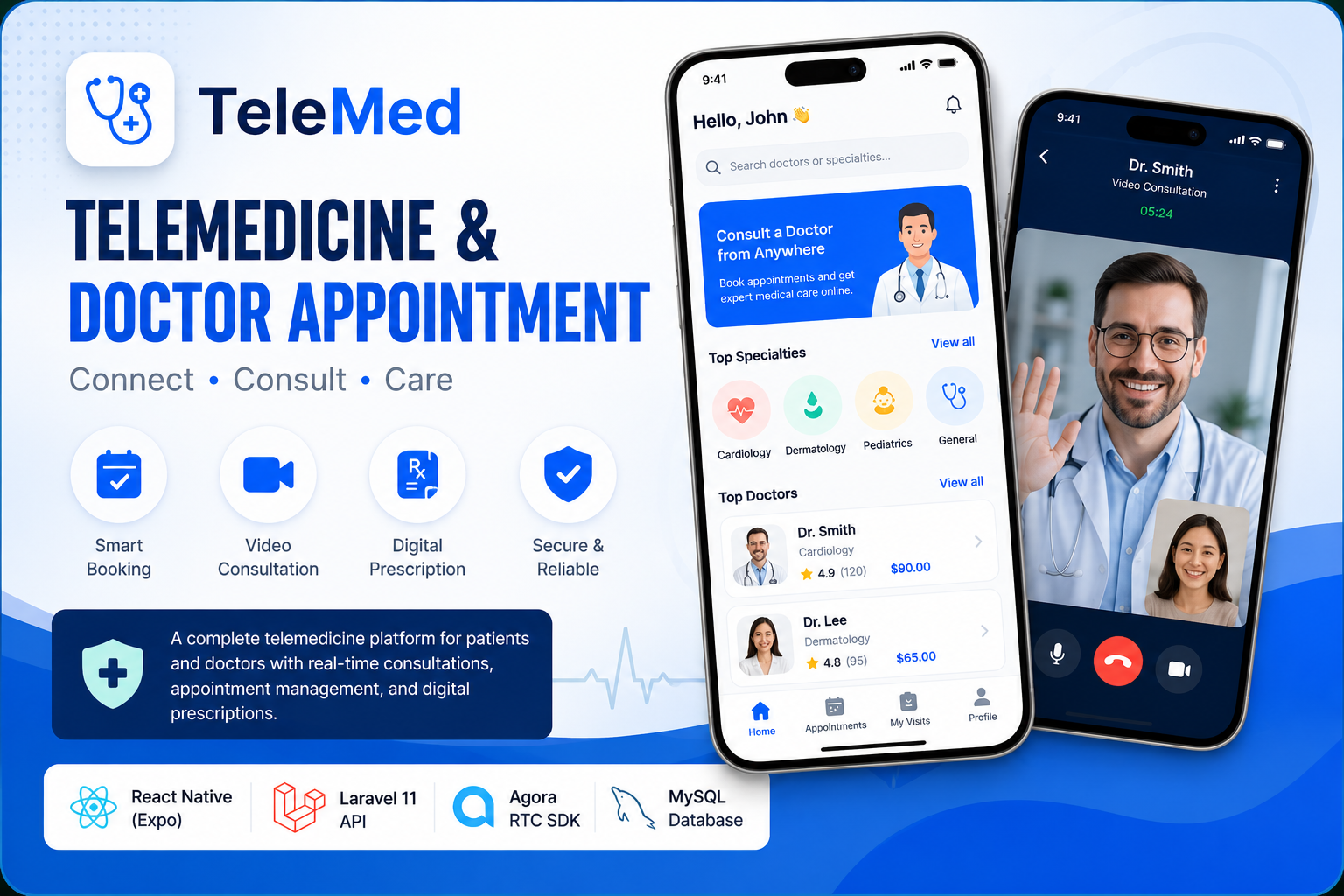
  • Doctor discovery
  • Video consultations
  • Digital prescriptions
  • Appointment scheduling
Healthcare · Mobile Apps

Telemedicine Appointment & Virtual Healthcare Platform

Separate React Native patient and doctor apps on a Laravel REST API with JWT authentication, Agora video visits and digital prescriptions. A US telehealth build would add HIPAA-minded controls.

View case study : Telemedicine Appointment & Virtual Healthcare Platform
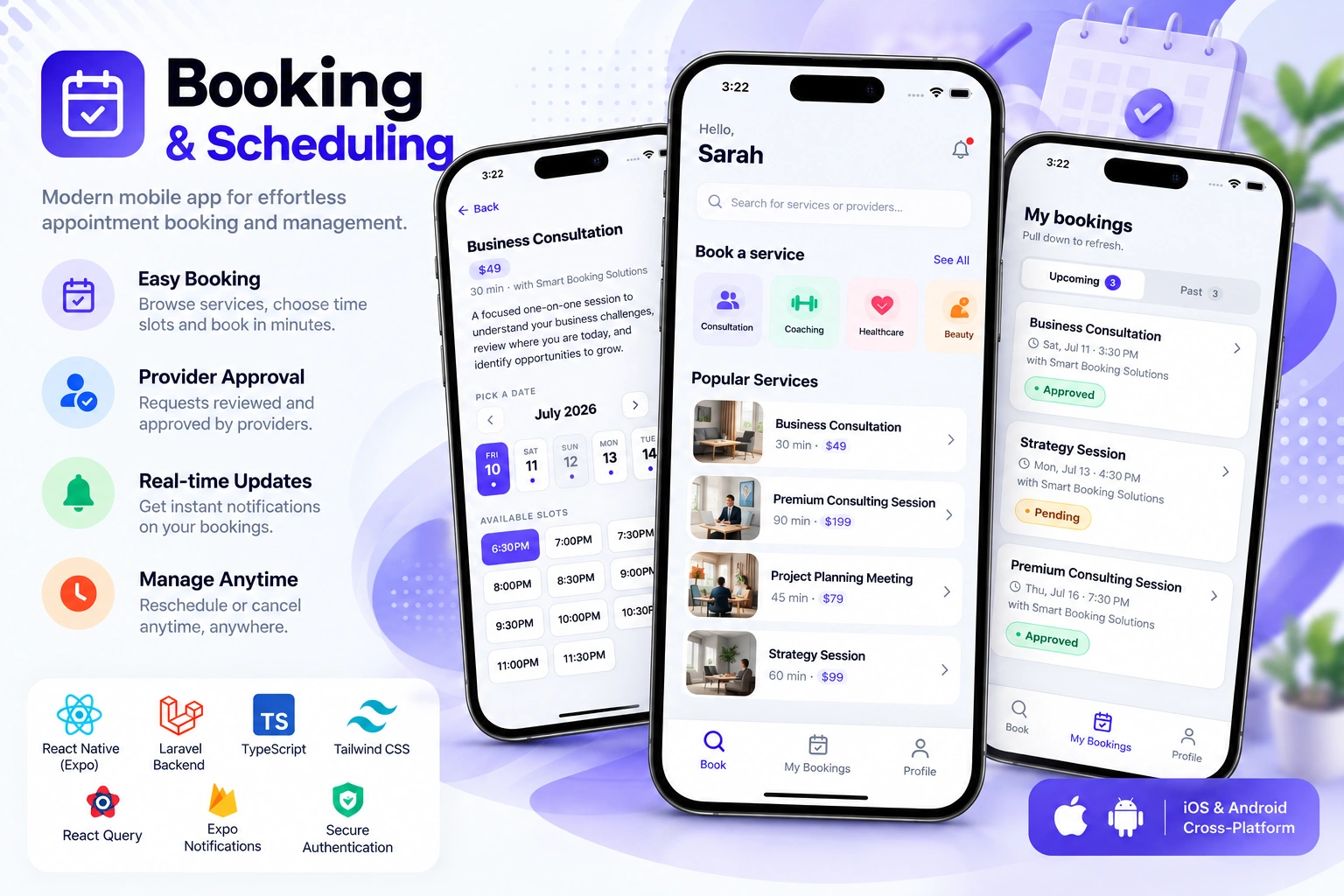
  • Service browsing
  • Appointment booking
  • Booking management
  • Real-time updates
Service Booking · Mobile App

Booking Mobile App

An Expo and TypeScript app where customers browse services, book and manage appointments and get real-time updates via Laravel Sanctum, a fit for US salons, clinics and home services.

View case study : Booking Mobile App
Start Your Project

Launching on both US app stores, or taking over a React Native app from another vendor?

Send us your feature list, designs or repository access. We will confirm whether React Native fits, flag the native and privacy work involved, and propose a version-one feature set and release plan.

FAQ

React Native questions from US product teams

Will US iPhone users be able to tell the app is React Native? +

For most business apps, no. React Native renders Apple's and Google's own UI components rather than a web view, and with the New Architecture and the Hermes engine, scrolling, navigation and startup feel close to native. We follow iOS conventions on iPhone, where most US users are, and Android conventions on Android.

Can our iOS app take payments outside Apple's in-app purchase? +

Physical goods and real-world services, such as orders, bookings and deliveries, are normally paid through Stripe, Apple Pay or PayPal rather than in-app purchase. For digital content, US iOS apps may now link to external web checkout after Epic v. Apple, but Apple's future commission on those links is still unsettled. We design the payment flow around Apple's current guidelines and your business model.

We handle patient data. Can you build a telehealth app with HIPAA in mind? +

Yes. Our telemedicine platform is a React Native patient and doctor app pair on a Laravel API, and a US build would add HIPAA-minded controls: encrypted on-device storage, no health data in push notifications or crash logs, session timeouts, audit events on your backend, and video and messaging vendors willing to sign a business associate agreement. Compliance also depends on your policies and hosting.

Can the mobile app share code with our React web app? +

Yes, at the logic level. TypeScript types, API clients, validation and state management can live in a shared package used by your React or Next.js web app and the mobile app. Screens usually stay separate, because native navigation and browser layouts follow different patterns.

Our app was built by a previous vendor. Can you take it over? +

Yes. We start with an audit of the React Native version, outdated libraries, build setup, crash reports and who holds the Apple and Google account access. Then we move the code, signing keys and store listings under your company's control and plan upgrades in steps so releases keep going.

Do you build with Expo or bare React Native? +

Most new apps start on Expo with EAS Build, since development builds and config plugins now handle custom native modules, so there is rarely a reason to eject. We use a bare workflow when an existing app or a vendor SDK requires it. Either way, builds run in CI under your Apple and Google accounts and arrive on TestFlight and Play testing tracks by your US morning.

Case Studies

Related Projects