React Native App Development UK

React Native app development in the UK: iOS and Android apps your React and TypeScript team can own.

StatCounter put UK mobile use at 51.4% iOS and 48.5% Android in August 2026, so most apps need both stores. We build React Native apps that reach both from one typed codebase your React developers can read, with Apple Pay, Google Pay and postcode lookup, delivered remotely from India.

Why Both Stores Matter

Your React skills, shipped to the App Store and Google Play.

Shared Logic

API clients, types, sign-in and payment flows shared across iOS, Android and your React web app.

Native When Needed

Swift or Kotlin modules for hardware such as NFC or Bluetooth devices, with everything else in one codebase.

About The Service

UK phones split almost evenly between iPhone and Android, so a single-platform launch leaves half your customers waiting. React Native draws real platform UI from TypeScript, letting one team ship to both stores with the patterns, libraries and people behind your React web product.

Who It Suits

UK start-ups, fintech and scale-up teams with React or Node.js skills, plus SMEs and suppliers to councils or the NHS that need one app on both stores.

What You Get

A typed React Native codebase connected to your APIs, UK payment and address integrations, store-ready iOS and Android builds, and handover documentation.

Where It Stops

Games, 3D apps, and banking- or health-grade products that depend on widgets, watch apps or deep OS security features often suit native better. The comparison below shows how we decide.

Business Benefits

One team, both UK app stores, one release rhythm.

The case is mostly practical: one team, one release rhythm and one test suite for both platforms. For UK SMEs wary of tools built for enterprises, it also keeps the app small enough to own and maintain.

One codebase for iOS and Android, so a fix to checkout, onboarding or account screens reaches every UK user in the same release.

Your UK web developers can read and extend the app, because it uses the same React and TypeScript they already write.

Over-the-air updates such as EAS Update ship JavaScript fixes, such as revised consent text, between store releases within Apple and Google policies.

Maintained libraries cover Apple Pay, Google Pay, Stripe, maps and push notifications, so most UK apps need little custom native code.

Our Services

React Native services for UK start-ups, SMEs and scale-ups.

Need extra hands on an existing codebase instead? See hire React Native developers. For the web side of a shared React product, see ReactJS development in the UK.

New React Native Apps

Greenfield iOS and Android apps in TypeScript for UK consumer, fintech and service brands, with navigation and state management sized to the app.

Expo & EAS Workflows

Expo projects with EAS Build, Submit and Update, so builds and store submissions run from CI instead of one developer's laptop.

UK Payments & Wallets

Apple Pay and Google Pay through Stripe, Adyen or Checkout.com, Direct Debit via GoCardless, and sign-in flows designed around strong customer authentication.

Native Modules & Device APIs

Camera, maps, push notifications, Bluetooth and biometrics, UK postcode search, and Swift or Kotlin modules when no library fits.

API & Accounting Integration

REST or GraphQL APIs, token authentication, offline caching and secure storage, Xero or QuickBooks syncs, and Laravel backends from our own team.

Upgrades & Performance Fixes

Moving older apps to the New Architecture and Hermes, replacing abandoned libraries, and fixing slow lists, startup time and memory use.

Framework Comparison

React Native, Flutter or native: which suits your UK app?

We weigh your team's skills, your UI and how far the app reaches into device hardware, and recommend Flutter or a native build when either fits better. Compare Flutter app development, Android app development and iOS app development in the UK.

When React Native fits

Your team or web product already uses React and TypeScript, you need both stores from launch, and the app relies on standard UI and common device features.

When Flutter fits

You want a heavily branded, custom-drawn UI that looks identical on every phone, rich animation, or a Dart codebase that may later reach desktop, and you have no React code to reuse.

When native iOS or Android fits

Banking- or health-grade apps with deep platform features such as widgets, watch apps, NFC or low-latency media, or a launch on one platform only.

When a web app is enough

If users need no push notifications, device hardware or store presence, a responsive React or Next.js web app built to WCAG 2.2 AA may serve them with one product fewer.

Development Process

Our React Native delivery process, scheduled around the UK working day.

Each phase ends with a build you can install on real phones, with the review call booked within your working day.

Discovery & Data Mapping

We map user flows, native features and the personal data the app handles, including who on our side may access it, and confirm React Native fits.

UX for Both Platforms

Designs follow iOS and Android conventions and WCAG 2.2 AA, with UK formats: DD/MM/YYYY dates, postcodes, mobile numbers and British English copy.

Typed Foundation

TypeScript, ESLint, navigation, environment configs and a shared API layer in sprint one, with staging in a UK or EU cloud region where you require it.

Feature Sprints

Features land in short sprints with TestFlight and Play testing builds, demoed on calls in UK mornings, whether GMT or BST.

Automated & Device Testing

Jest and React Native Testing Library for logic and components, plus manual checks with VoiceOver, TalkBack and large text sizes on both platforms.

Store Release & Updates

App Store and Play Console listings, privacy labels and data safety forms, consent for non-exempt tracking, then OTA patches and versioned releases.

Work Showcase

React Native apps from our portfolio, and how they map to UK needs.

Three React Native builds on Laravel APIs: a peer-to-peer marketplace, a two-sided healthcare platform and a service booking app, each a pattern UK businesses commonly need.

  • Real-time chat
  • Product listings
  • Order management
  • Stripe Connect
Marketplace · iOS & Android

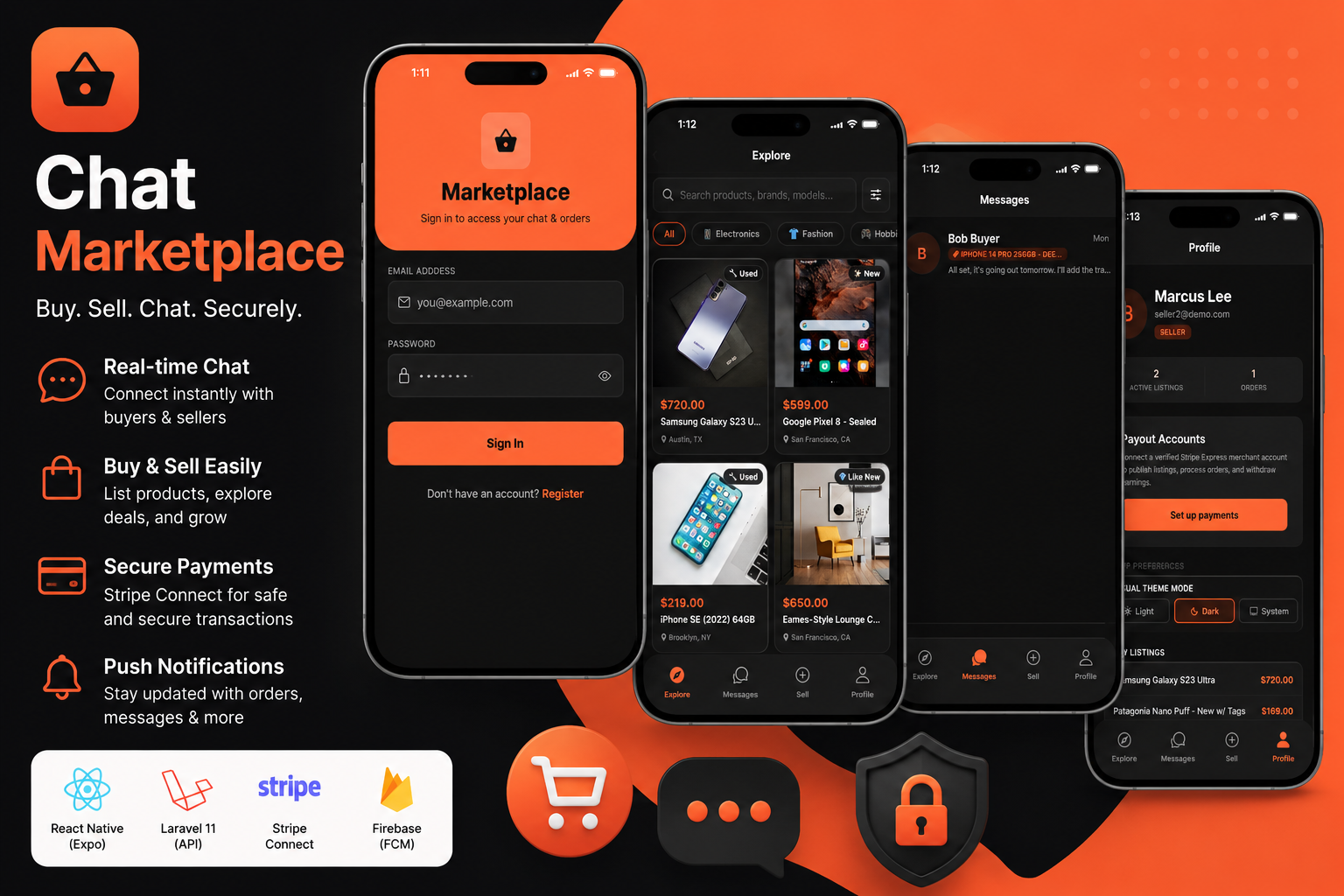
Chat Marketplace App

A peer-to-peer marketplace with real-time chat, listings, orders and Stripe Connect payments on a Laravel API. UK user-to-user apps must also weigh Online Safety Act duties.

View case study : Chat Marketplace App
  • Doctor discovery
  • Video consultations
  • Digital prescriptions
  • Appointment scheduling
Healthcare · Mobile Apps

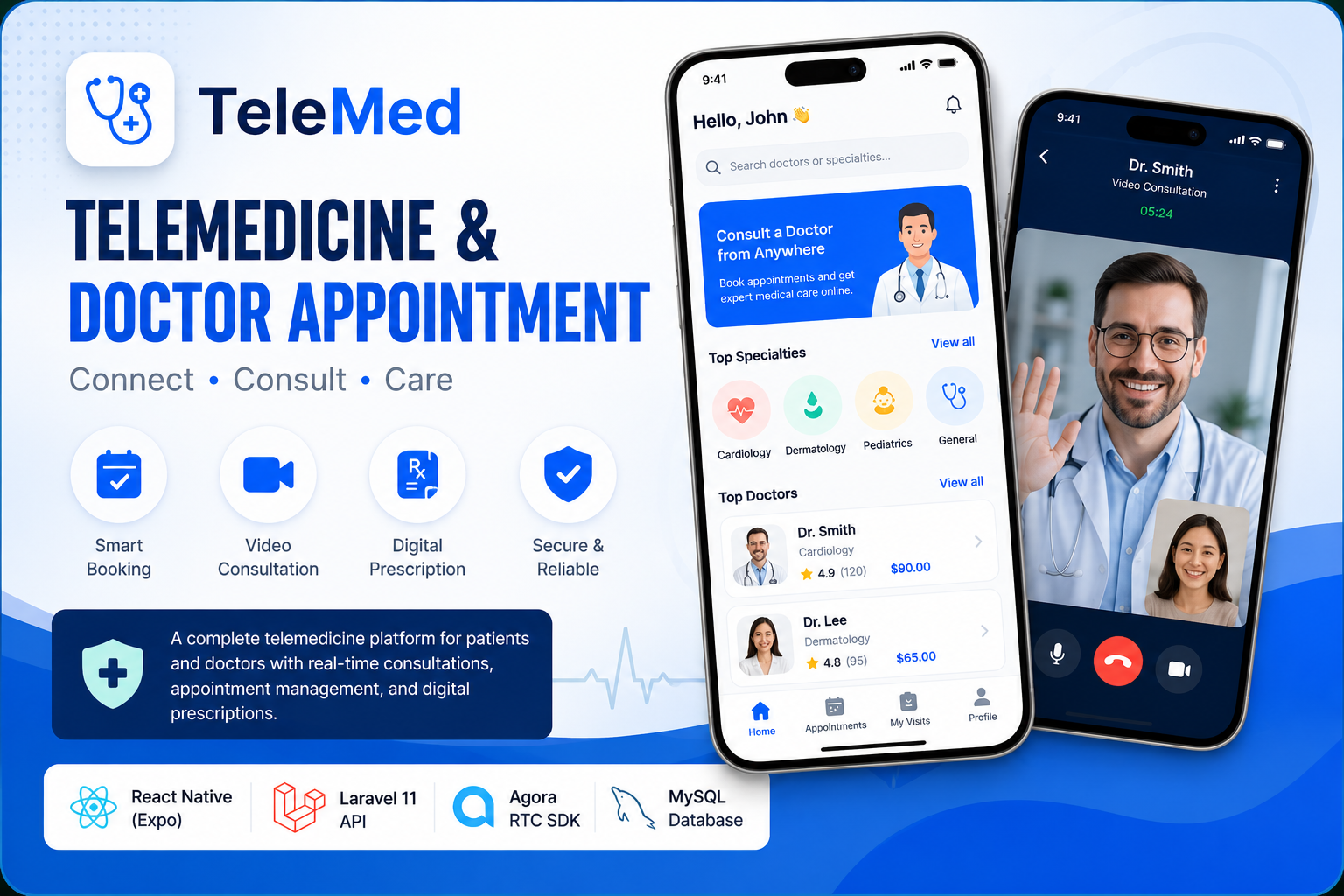
Telemedicine Appointment & Virtual Healthcare Platform

Patient and doctor React Native apps on a Laravel REST API, with Agora video consultations and digital prescriptions. A UK version sold to the NHS would face DTAC assessment.

View case study : Telemedicine Appointment & Virtual Healthcare Platform
  • Service browsing
  • Appointment booking
  • Booking management
  • Real-time updates
Service Booking · Mobile App

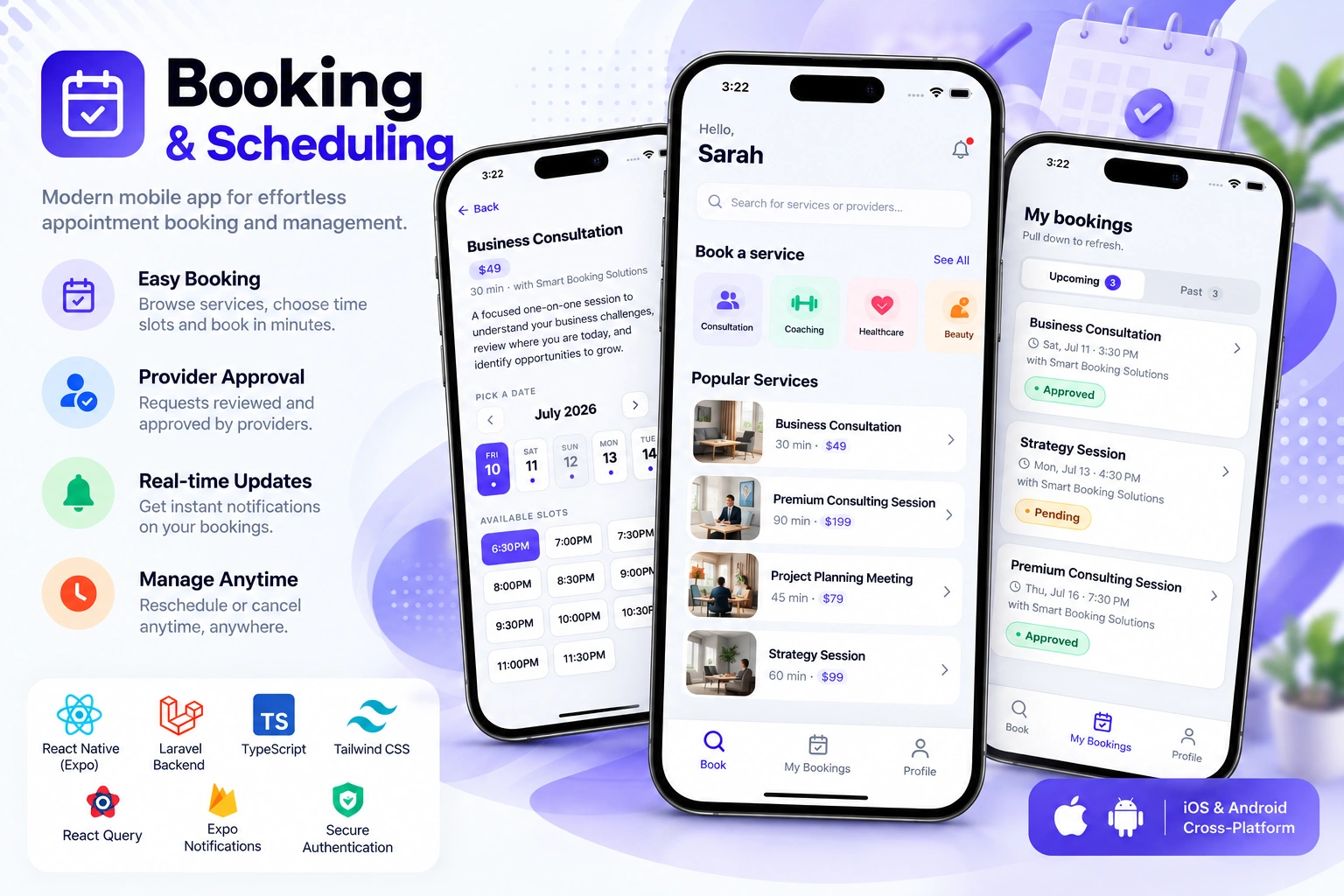
Booking Mobile App

An Expo and TypeScript app for browsing services, booking appointments and live updates, with Laravel Sanctum auth. The same pattern suits UK clinics, salons and trades firms.

View case study : Booking Mobile App
Start Your Project

Planning a React Native app for UK customers, or rescuing an existing one?

Tell us what UK customers should be able to do in the app, or share a repository that needs rescuing. We will say whether React Native suits it, which payment, data-protection and accessibility pieces apply, and what a first release could include.

FAQ

Questions UK teams ask about React Native apps.

Can our React web app and React Native app share code? +

Yes, for the parts that are not UI. API clients, TypeScript types, validation rules, sign-in logic and state management can live in a shared package used by both, often in a monorepo, while screens are built separately for web and mobile. That keeps business rules consistent and lets your web developers review mobile changes.

Do we have to use Apple and Google in-app purchases? +

It depends on what you sell. Physical goods and services used outside the app, such as deliveries or appointments, are paid through your own gateway with Apple Pay, Google Pay, cards or Direct Debit, with strong customer authentication handled by the provider. Digital content and subscriptions used inside the app generally have to use the stores' own billing. The CMA is still reviewing the rules on steering UK users to outside payments, so we check current store policy for your case.

Should we use Expo or bare React Native? +

For most new apps we start with Expo: EAS Build and Submit run releases from CI, and development builds still allow custom native modules. A bare setup can suit an older app with heavy native code, and moving such an app onto Expo tooling is often possible in stages. We recommend one after reviewing your native requirements.

What working hours overlap can we expect from the UK? +

India is 5.5 hours ahead of the UK in winter (GMT) and 4.5 hours in summer (BST), so stand-ups, demos and reviews happen in UK mornings and lunchtime. New TestFlight and Play testing builds from our day are ready to install when your team starts, and release dates are planned around bank holidays, which differ between England and Wales, Scotland and Northern Ireland.

Your team works from India. How is our UK users' personal data handled? +

India has no UK adequacy decision, so remote access by our developers counts as a restricted transfer under UK GDPR and the Data Protection Act 2018. You choose the legal mechanism, usually the IDTA or the UK Addendum with a transfer risk assessment. We support it with least-privilege access, staging in a UK or EU cloud region where you need it, and seeded or anonymised test data instead of live customer records.

Can the app meet accessibility expectations for NHS, council or university clients? +

Public sector mobile apps fall under the Public Sector Bodies (Websites and Mobile Applications) (No. 2) Accessibility Regulations 2018, which expect WCAG 2.2 AA and a published accessibility statement, and private firms have reasonable-adjustment duties under the Equality Act 2010. We build to WCAG 2.2 AA with labelled controls, scalable text and colour contrast checks, test with VoiceOver and TalkBack, and document known issues to help you write the statement.

Case Studies

Related Projects