React Native App Development Canada

React Native app development in Canada for teams taking a React web product to iPhone and Android

SofttechOver builds React Native apps for Canadian companies that already run a React or Node.js web product and now need it on iPhone and Android. One typed codebase ships to both stores, English and Canadian French strings can be shared with your web app, and the backend can run in a Canadian cloud region when data residency matters.

Why It Fits Canada

Your React skills, on both app stores and in two languages.

Both Stores, One Release

App Store and Google Play builds come from the same code and ship on the same day.

English and French

en-CA and fr-CA strings, dates and number formats from day one, so Quebec users get a complete French app.

About The Service

Canadian apps often carry two of everything: two stores, two official languages, two sets of store listings. React Native lets one team ship to the App Store and Google Play from TypeScript, with English and French copy, consent screens and accessibility labels managed in one place instead of two native apps.

Who It Suits

Startups and SMEs in Toronto, Montreal, Vancouver, Calgary and Ottawa with a React or Node.js web product that now needs an app on both stores.

What You Get

A typed codebase with en-CA and fr-CA localization, store-ready builds, a documented map of the personal data the app collects, and handover notes.

Where It Stops

Games, AR and products built around CarPlay, watch apps or heavy background processing usually suit native or another framework better. We will say so before you commit.

Business Benefits

What React Native solves for Canadian product teams.

In Canada the case for React Native is practical: an audience that leans iPhone but cannot ignore Android, a second official language, and in-house React developers who are hard to hire more of.

StatCounter put iOS at about 65% of Canadian mobile use in September 2026, with Android near 35%. One codebase serves both without a second team.

English and Canadian French translations, plus validation and API types, can sit in a shared package used by your React web app and the mobile app.

A remote React Native team adds mobile capacity without separate Swift and Kotlin hires, and your in-house React developers can take over screens later.

EAS Update can ship a JavaScript fix, such as a corrected French label, between store releases, within Apple and Google policies.

Our Services

React Native services for Canadian startups and SMEs, from new builds to upgrades.

Need extra hands on an existing codebase instead? See hire React Native developers. For the web side of a shared React product, see React.js development in Canada.

New Bilingual React Native Apps

Greenfield iOS and Android apps in TypeScript with React Navigation, i18n set up for English and Canadian French, and state management sized to the app.

Expo & EAS Workflows

Expo projects with EAS Build, Submit and Update, so builds and store submissions run from CI instead of one developer's laptop.

Native Modules & Device APIs

Camera, maps, push notifications, biometrics and Bluetooth, with custom Swift or Kotlin modules when no maintained library fits.

Canadian Payments & Integrations

Stripe or Moneris card payments, Apple Pay and Google Pay via Stripe, Canada Post AddressComplete for addresses, and QuickBooks Online sync via your backend.

APIs & Canadian Hosting

REST or GraphQL APIs with token auth and secure on-device storage, and Laravel backends we can deploy to AWS Montreal or Calgary or Azure Canada.

Upgrades, Releases & Support

New Architecture and Hermes upgrades, replacing abandoned libraries, TestFlight and Play testing tracks, crash monitoring and a steady release cadence.

Framework Comparison

React Native, Flutter or native for a Canadian audience?

We weigh your team's skills, your audience and how far the app reaches into device hardware, and recommend Flutter or a native build when either is the better match. Compare Flutter app development, Android app development and iOS app development in Canada.

When React Native fits

Your web product already uses React and TypeScript, you want one set of English and French strings across web and mobile, and the app uses common device features.

When Flutter fits

You want a pixel-identical branded UI in both languages on every device, heavy animation, or a Dart codebase that might later target desktop, and there is no React code to reuse.

When native iOS or Android fits

The app depends on widgets, watch or car apps, AR or low-latency media, or it is an internal tool for staff who all carry company-issued iPhones.

When a web app is enough

If users need no push notifications, device hardware or store presence, an accessible bilingual web app built to WCAG 2.1 AA may serve them with one fewer product to run.

Development Process

From discovery to bilingual store release: our React Native process.

Each phase ends with a build you can install on real devices, reviewed together in a scheduled call during your morning.

Discovery & Privacy Mapping

We map user flows, native features and every piece of personal data the app touches, and agree where the backend is hosted before code is written.

UX for Both Platforms

Designs follow iOS and Android conventions and leave room for French strings, which often run longer than English, plus VoiceOver, TalkBack and font scaling.

Typed Foundation

TypeScript, ESLint, navigation, en-CA and fr-CA locale files, environment configs and a shared API layer are set up in the first sprint.

Feature Sprints

Features land in short sprints with TestFlight and Play testing builds. Async daily updates, plus an overlap call in the Eastern Canada morning.

Automated & Device Testing

Jest and React Native Testing Library cover logic and components, plus manual passes in both languages and with screen readers on iOS and Android.

Store Release & Updates

Bilingual App Store and Play listings, privacy labels and data safety forms, review fixes, then OTA patches, with release dates planned around Canadian statutory holidays.

Work Showcase

Three React Native builds, and where their patterns fit in Canada.

Three React Native builds on Laravel APIs. The patterns behind them, marketplaces, virtual care and service booking, map directly onto common Canadian app projects.

  • Real-time chat
  • Product listings
  • Order management
  • Stripe Connect
Marketplace · iOS & Android

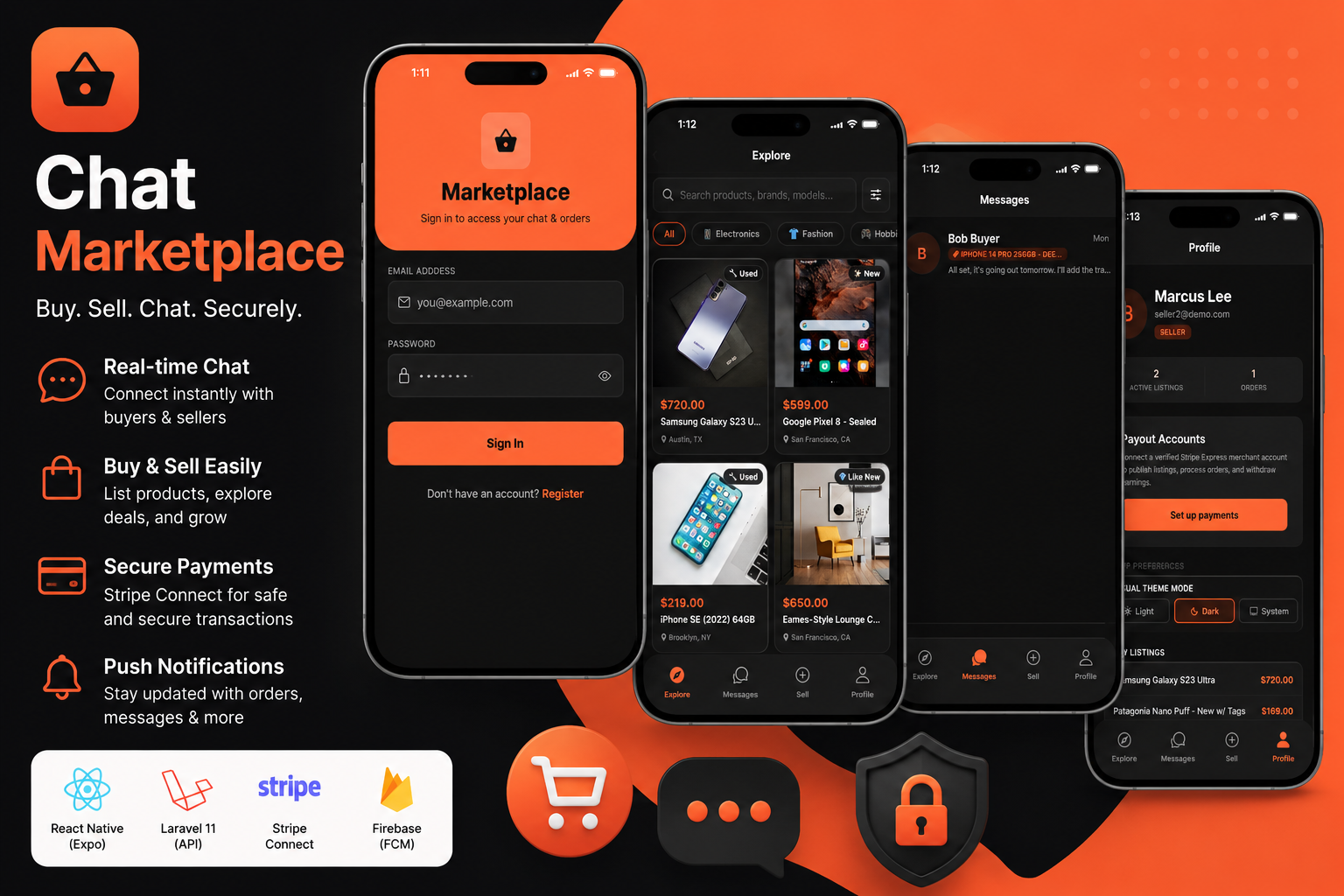
Chat Marketplace App

A peer-to-peer marketplace app with real-time buyer-seller chat, listings, orders and Stripe Connect payments on a Laravel API, a pattern suited to Canadian resale marketplaces.

View case study : Chat Marketplace App
  • Doctor discovery
  • Video consultations
  • Digital prescriptions
  • Appointment scheduling
Healthcare · Mobile Apps

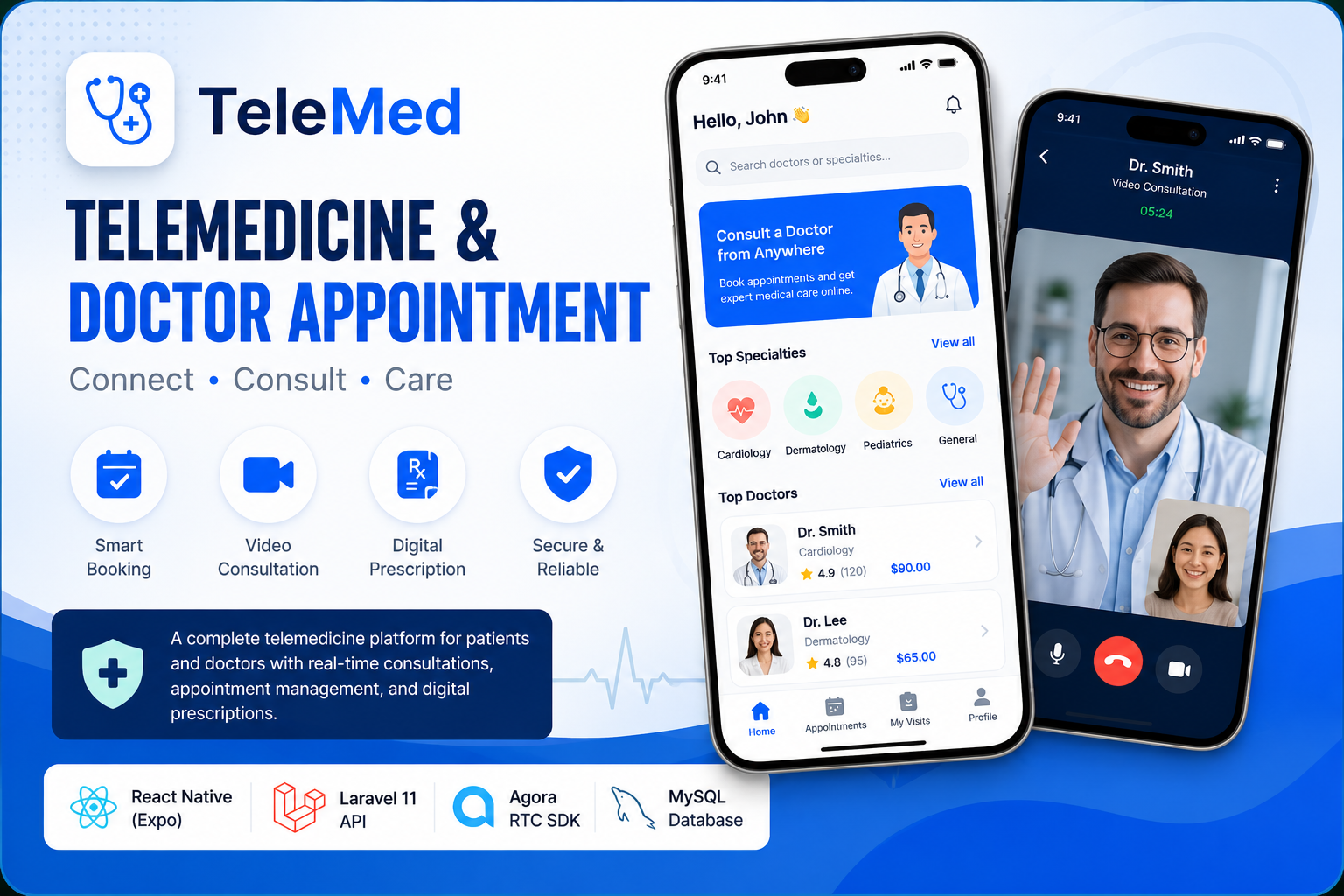
Telemedicine Appointment & Virtual Healthcare Platform

Separate patient and doctor React Native apps on a Laravel REST API, with Agora video consultations and digital prescriptions. Canadian virtual care would plan around rules such as Ontario's PHIPA.

View case study : Telemedicine Appointment & Virtual Healthcare Platform
  • Service browsing
  • Appointment booking
  • Booking management
  • Real-time updates
Service Booking · Mobile App

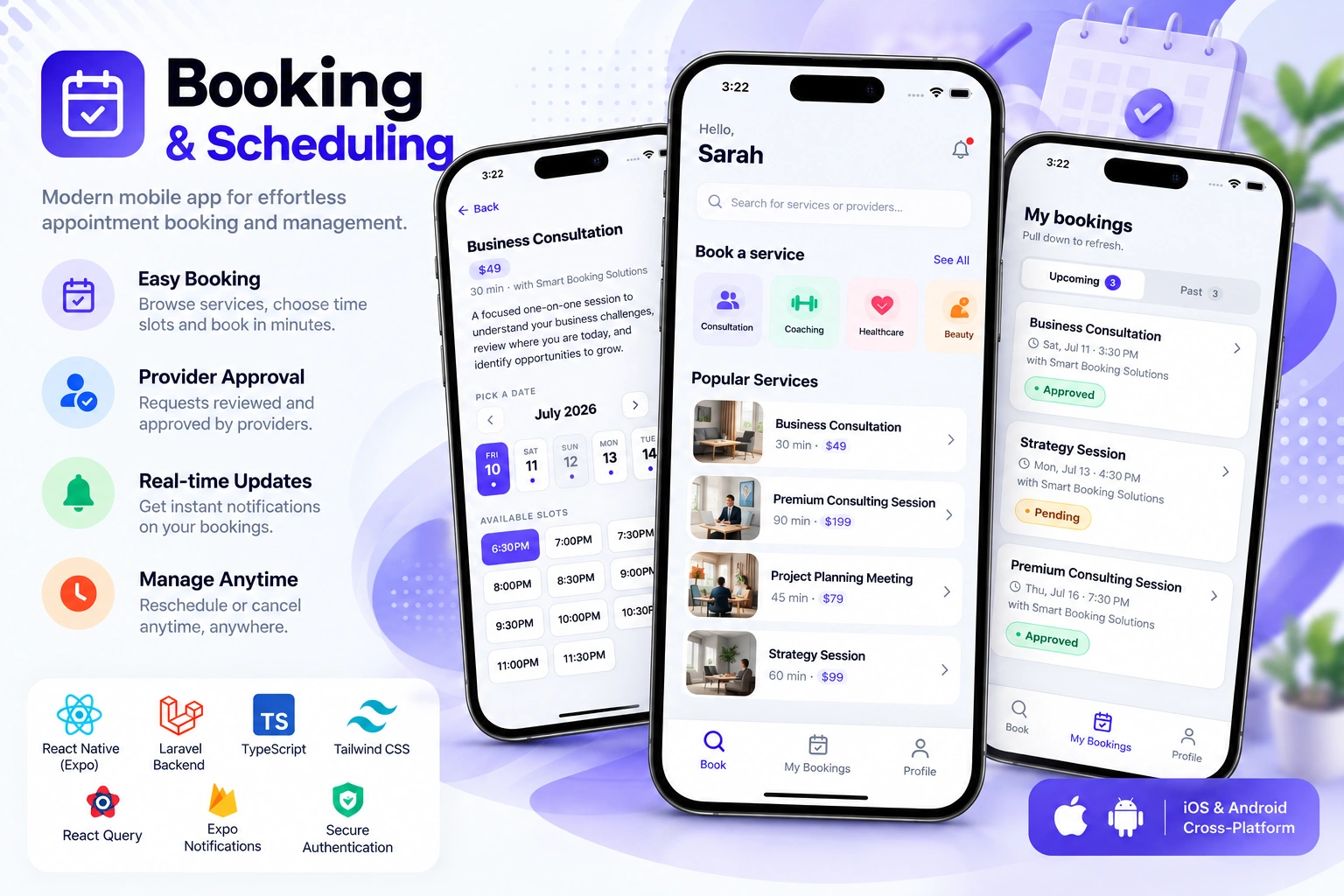
Booking Mobile App

An Expo and TypeScript app where customers browse services, book appointments and get real-time updates, with Laravel Sanctum auth, a starting point for Canadian clinics, salons and field-service firms.

View case study : Booking Mobile App
Mobile Project Review

Bringing your React product to mobile, or rescuing a React Native app?

Send us your feature list, Figma files or current repository. We will confirm whether React Native fits, explain how French localization, privacy work and payments shape the scope, and outline a first release.

FAQ

What Canadian businesses ask before building a React Native app.

Do we need separate English and French apps for Quebec users? +

No. One React Native app can carry English and Canadian French, follow the device language and offer an in-app switch, with store listings in both languages. We support both versions technically; your legal advisers confirm what Quebec's French-language rules require of your business.

Should we use Expo or a bare React Native project? +

For most new apps we start with Expo: EAS Build and Submit handle signing and store uploads from CI, EAS Update ships JavaScript fixes between store releases, and config plugins cover most native setup. A bare workflow makes sense when the app depends on native SDKs with no Expo support, such as some payment-terminal or hardware-scanner libraries. Existing bare apps can adopt Expo tooling step by step.

Where will our app's data be stored? +

That is your choice, and we plan it in discovery. On the phone, tokens and sensitive values go in the iOS Keychain or Android Keystore; the backend API and database can be deployed to a Canadian cloud region on AWS or Azure, or wherever your web product already runs.

How do you handle PIPEDA and Quebec Law 25 in an app? +

We build with them in mind: consent prompts that are not pre-ticked, analytics off until users agree, minimal data collection, and backend audit and breach logs. We also document data flows and hosting locations, which supports a privacy impact assessment. Your privacy counsel decides what compliance requires; we provide the technical evidence.

Can the app take payments from Canadian customers? +

Yes. Card payments run through Stripe or Moneris on your backend, with Apple Pay and Google Pay through Stripe's React Native SDK, and Interac Debit added where your provider supports it in-app. Physical goods and services can use these gateways; digital content and subscriptions sold in the app go through App Store and Google Play billing.

Can our React web developers work on the app after launch? +

Yes, that is one of React Native's main advantages. The app uses TypeScript and familiar React patterns, and where it helps it shares types, validation and English and French strings with your web app, so your developers can pick up screens quickly. We hand over the repository, EAS configuration and store accounts under your organization, with notes on any native modules that need Swift or Kotlin knowledge.

Case Studies

Related Projects