Android App Development Company USA

Android app development for US companies adding Android to an iOS product or running managed device fleets

SofttechOver builds native Android apps in Kotlin and Jetpack Compose for US companies that run crews on company-issued Android devices, need an Android app that matches their iOS one, or rely on scanners, Bluetooth hardware and background location.

US Field Service App

Work orders captured offline, synced when the crew is back in range.

Route and job details cached in Room

Signatures and photos synced by WorkManager

SMS updates sent from 10DLC-registered numbers

About The Service

How a US Android project runs, from discovery to daily builds.

We begin by mapping who uses the app, on which devices, which states they operate in, and what personal or health data it touches. That settles the architecture, minimum Android version and privacy controls before screens are built.

We work from India (IST), with a daily call window around 8 to 10am ET for East Coast teams and builds on a Play Console internal testing track by the time your team starts the day.

Kotlin & Jetpack Compose

New apps use Kotlin, Compose UI, MVVM, coroutines and Hilt, following Google's recommended architecture, so a US in-house team can take the code over cleanly.

Accessible by Default

TalkBack labels, touch-target sizes, font scaling and contrast are checked against WCAG 2.1 AA, the standard ADA Title II sets for US state and local government apps.

Existing Java Apps

We take over older Java and XML-layout apps from previous vendors, update target API levels and libraries, and move screens to Kotlin step by step.

Native vs. Cross-Platform

When a native Android app makes sense in the US market

iPhones lead US mobile usage, so most consumer launches need iOS on day one, and Android is too large a share to skip. If you need both from one codebase, compare Flutter app development and React Native app development; for an iPhone-first product, see iOS app development in the US.

Rugged Devices for Crews

Your drivers, technicians or warehouse staff carry rugged Android devices managed through Android Enterprise, often locked to one app in dedicated-device mode.

Android Parity for an iOS App

You launched on iPhone first, yet about 42% of US mobile traffic comes from Android; a native Android app reaches those users and leaves your Swift app untouched.

Bluetooth and Scanner Hardware

The app pairs with barcode scanners, Bluetooth LE medical or industrial sensors, receipt printers or NFC tags, where native APIs give the most control.

Location That Must Keep Running

Route tracking, proof-of-delivery uploads and scheduled sync must survive Doze mode and restarts, with location consent handled for state privacy rules.

What We Deliver

What we deliver on a US Android build, through to Google Play release.

New native Android apps in Kotlin and Jetpack Compose, using US date, time and imperial-unit conventions and optional Spanish UI.

Offline-first data with Room and background sync for crews in rural coverage gaps, with conflict rules when office and field edit the same job.

US integrations: Stripe and Google Pay, QuickBooks Online, USPS address validation, UPS or FedEx tracking, and Bluetooth scanners and printers through native APIs.

Messaging for crews and customers: FCM push for assignments and status changes, plus SMS job updates with opt-in and STOP handling.

Privacy and health-data controls: encrypted local storage, consent screens, data access and deletion flows, built with HIPAA, COPPA and state laws in mind.

Google Play release and care: signed App Bundles, Data safety forms, staged rollouts, yearly target API updates and Crashlytics crash and ANR monitoring.

Android Projects

Portfolio apps that already run on Android

These apps are built with Flutter or React Native and ship to Google Play alongside the App Store, as most US products do. Each covers Android-side work a native build also needs: live location, video calls, in-app payments and a Laravel backend.

  • Rider navigation
  • GPS tracking
  • Push notifications
  • Online ordering
Food Delivery · Android & iOS

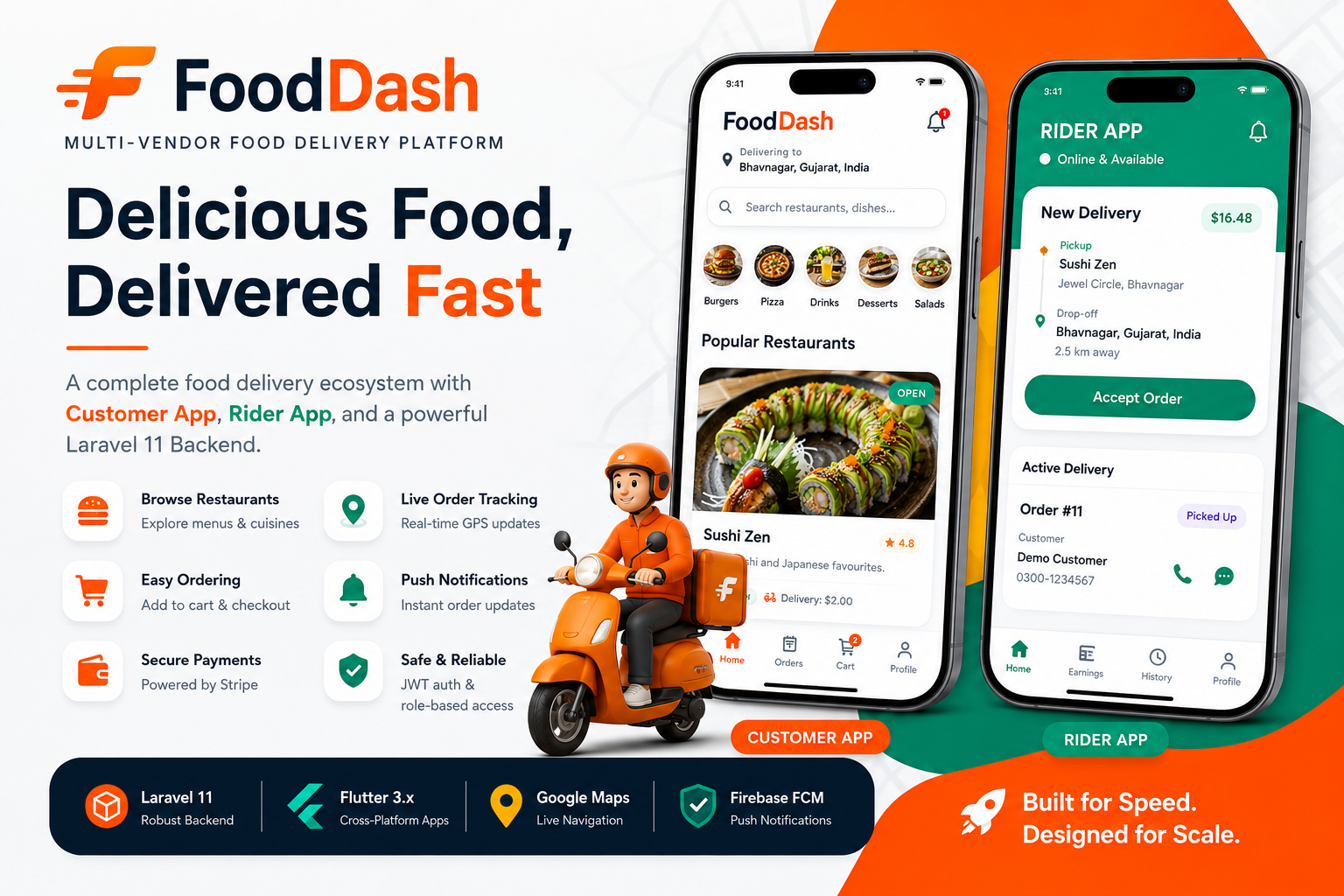
FoodDash Customer & Rider Apps

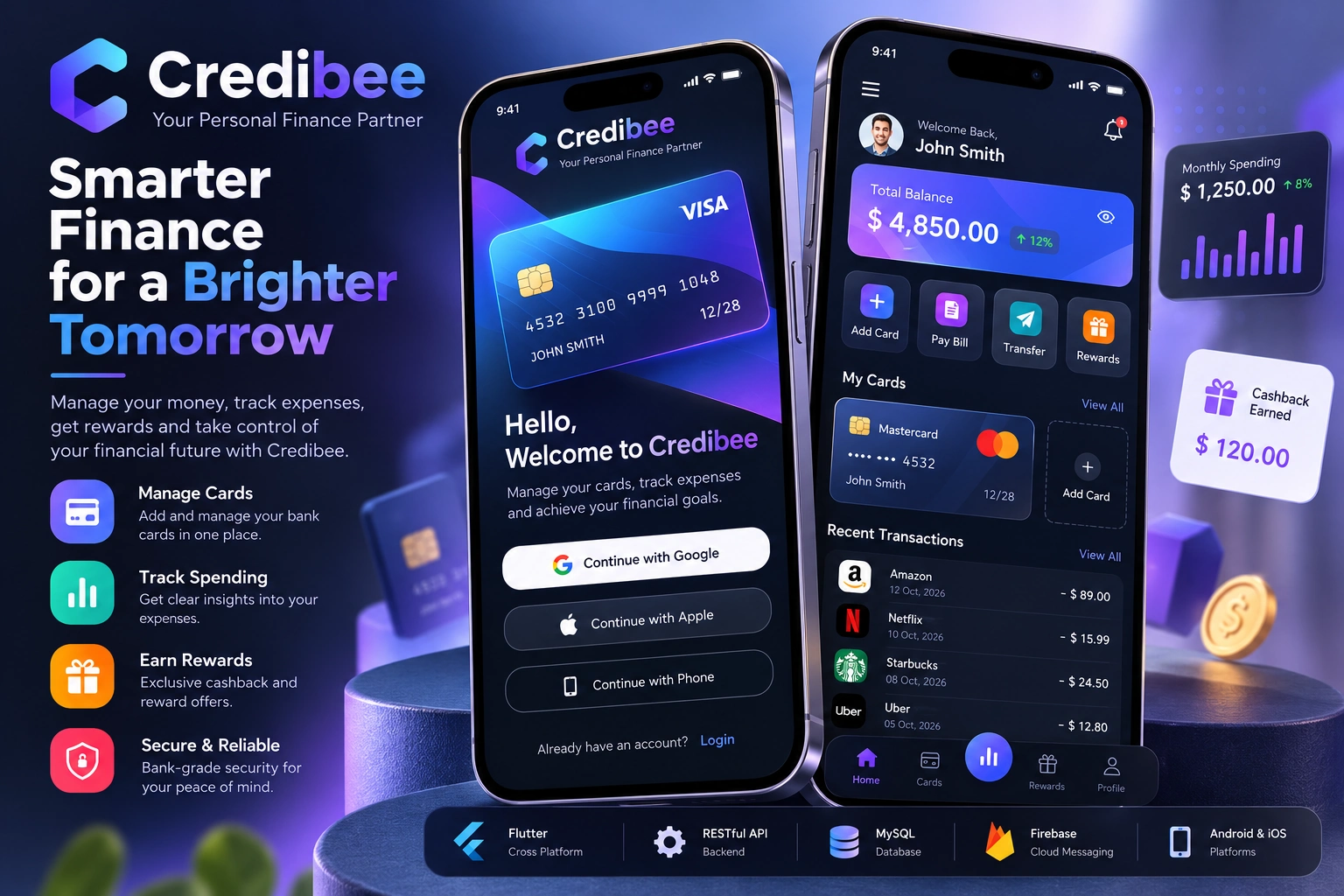
Flutter apps for delivery riders and customers: riders navigate with Google Maps, GPS tracking and push alerts, customers order and track deliveries on a Laravel REST API. The pattern suits US last-mile operators.

View case study : FoodDash Customer & Rider Apps
  • Patient app
  • Doctor app
  • Video consultations
  • Digital prescriptions
Healthcare · Android & iOS

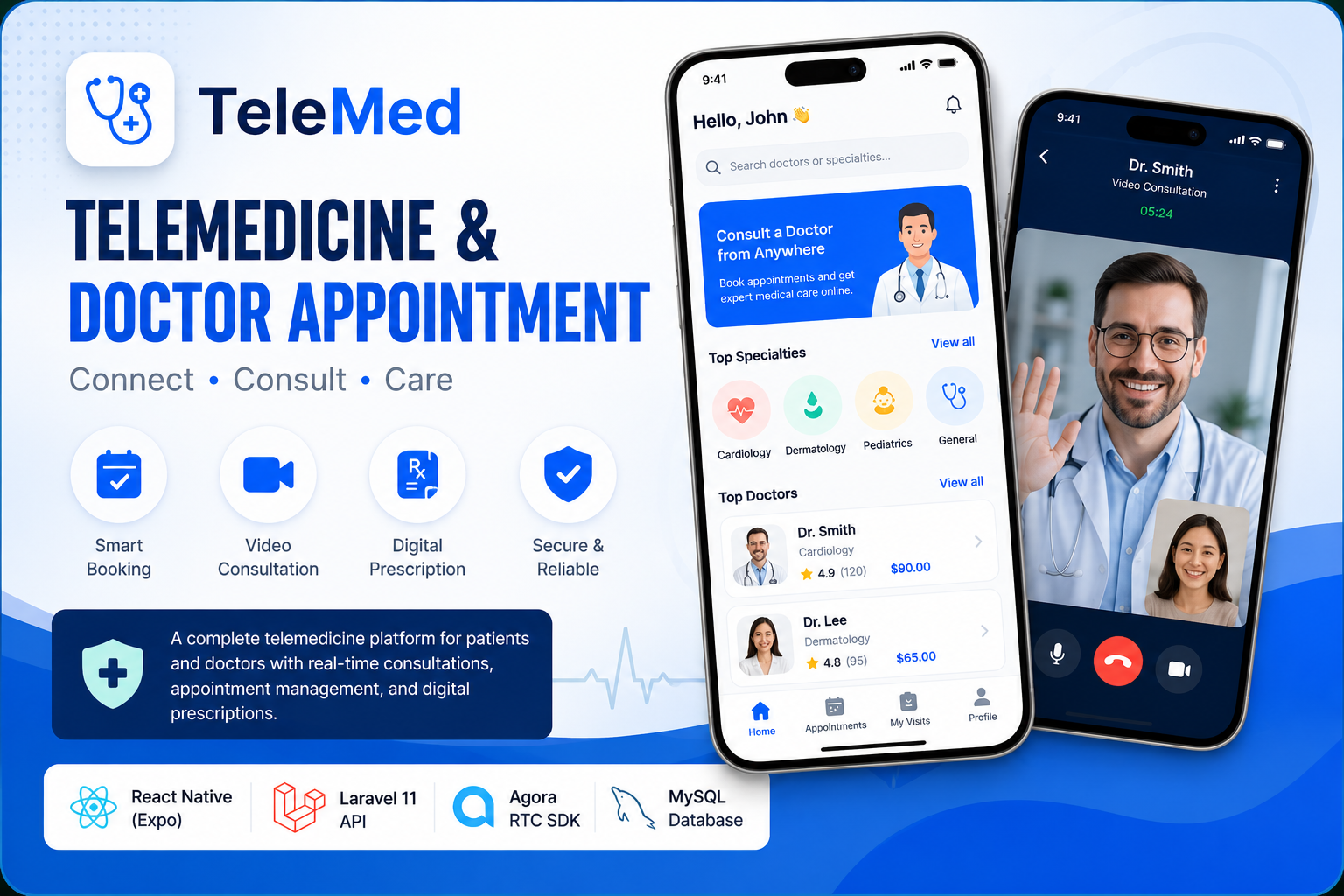
Telemedicine Appointment & Virtual Healthcare Platform

Separate React Native patient and doctor apps on a secure Laravel REST API: patients book verified doctors and join video consultations, doctors manage schedules and prescriptions. US builds add HIPAA-driven controls.

View case study : Telemedicine Appointment & Virtual Healthcare Platform
  • Listings
  • Real-time chat
  • Order management
  • Stripe Connect
Marketplace · Android & iOS

Chat Marketplace App

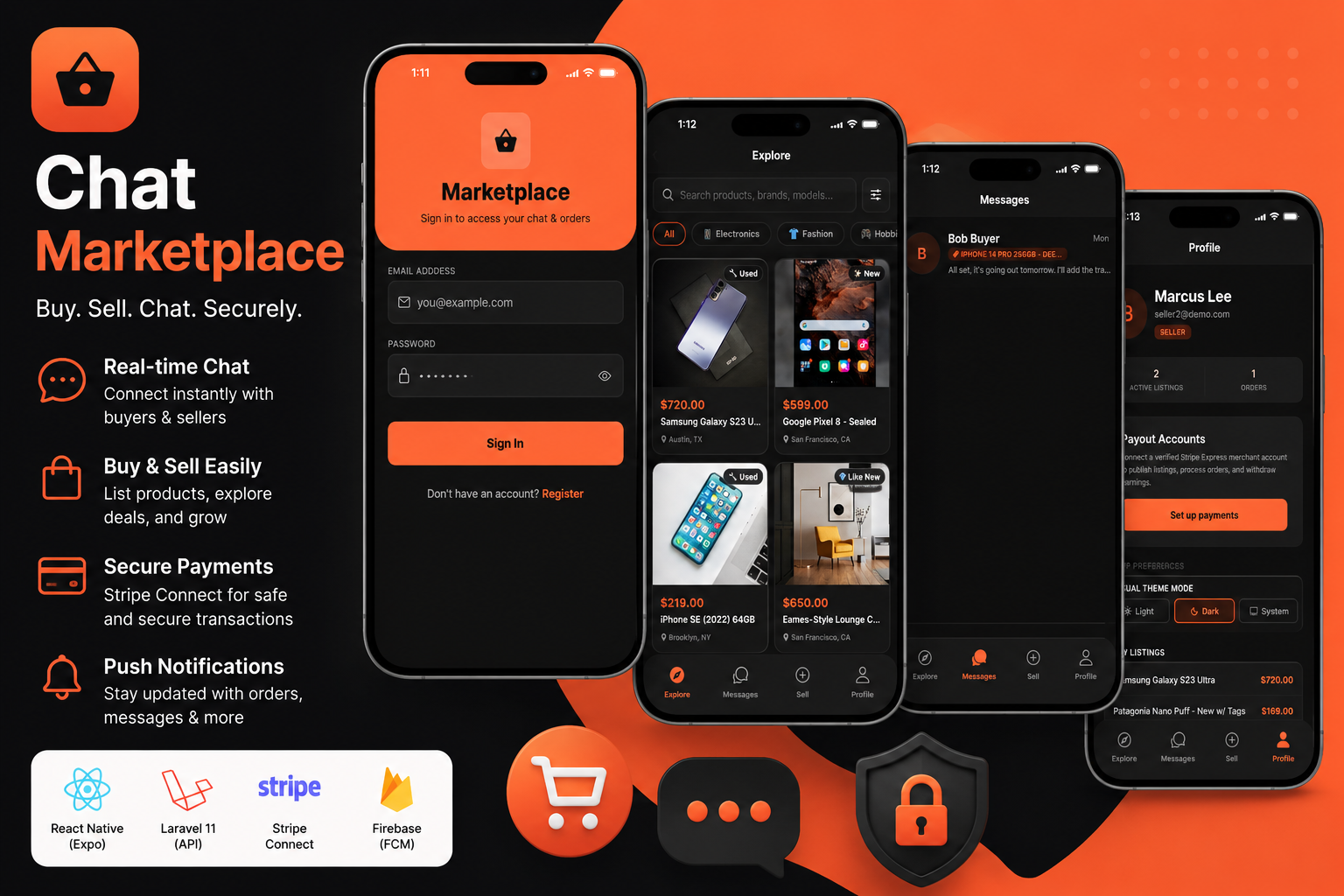
A peer-to-peer marketplace in React Native on a Laravel API: users create listings, chat with buyers and sellers in real time, manage orders and pay through Stripe Connect on Android and iOS.

View case study : Chat Marketplace App
Start Your Project

Adding Android to your US product, or replacing a fleet app that keeps crashing?

Send us your feature list, your iOS app, or access to your current Android app and Play Console. We will review it and reply with a recommended architecture and a scoped first release.

FAQ

Native Android app questions from US companies

iPhones lead in the US. Should we still build a native Android app? +

Often yes. Android accounts for roughly 42% of US mobile traffic (StatCounter), and many field teams already carry managed Android devices. Native Kotlin is the right call for managed fleets, hardware-heavy apps, or when you already have a Swift iOS app you want to keep. If you are starting both platforms from scratch with a mostly forms-and-data app, Flutter or React Native usually reaches both stores with one codebase, and we will tell you so.

Can the app run on rugged, company-managed Android devices? +

Yes. We build for Android Enterprise so your IT team can deploy the app through its mobile device management tool, push managed configuration such as server URLs or depot IDs, and lock devices to one app in dedicated-device mode. We test on the hardware your crews actually carry, including built-in barcode scanners, rather than only on consumer phones.

How do you keep background location and sync reliable on Android? +

We use WorkManager for deferrable uploads, foreground services only where Android requires them, and location updates at intervals that respect battery life, then test through Doze mode, restarts and weak coverage. Google Play reviews background location access closely, so we prepare the permission rationale and disclosure screens and keep location collection to what your privacy policy describes.

Do you publish to Google Play under our US developer account? +

Yes. We work in your own Play Console account so the listing and signing keys stay with your company. We prepare signed App Bundles, complete the Data safety and content rating forms, handle review feedback, and schedule the yearly target API level updates Google Play requires for the app to stay available on newer Android versions.

Our Android app was written in Java years ago. Do we need a rewrite? +

Usually not. Kotlin and Java run side by side, so we first update the target API level and libraries to keep the app available on Google Play, then move screens to Kotlin and Jetpack Compose as they need changes. A full rewrite only makes sense when the architecture blocks new features, and an audit shows you where that line is. Builds land on your internal testing track by your morning.

Case Studies

Related Projects