
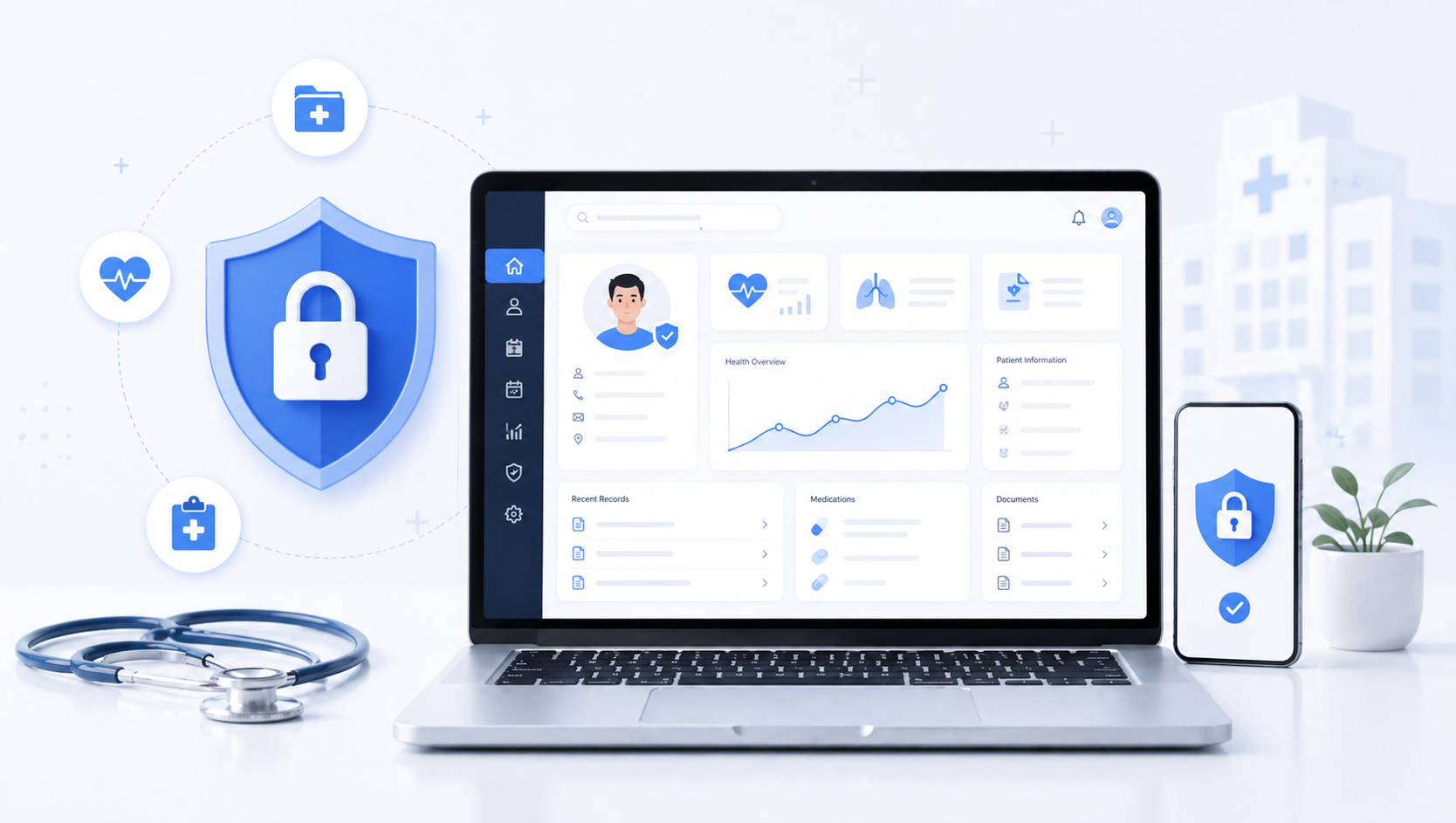
Building healthcare applications in 2026 requires more than just great features and user experience. Security and compliance are critical, especially when dealing with sensitive patient data. If you are planning hipaa compliant app development, understanding real-world implementation is essential.
In this case study, we’ll walk through how a healthcare application was built with HIPAA compliance in mind, covering architecture decisions, security practices, and challenges faced during development.
Quick Summary
- HIPAA compliance ensures patient data protection
- Encryption and access control are mandatory
- Secure architecture is critical for healthcare apps
- Regular audits and logging are required
- Compliance impacts development cost and timeline
What is HIPAA Compliance?
HIPAA (Health Insurance Portability and Accountability Act) is a regulation that ensures the protection of sensitive patient health information.
- Protects patient data (PHI)
- Enforces strict access control
- Requires data encryption
- Mandates audit trails
Project Overview (Case Study)
A healthcare startup aimed to build a patient management app that allows users to:
- Book doctor appointments
- Access medical records
- Communicate with healthcare providers
The main challenge was ensuring full HIPAA compliance while maintaining a smooth user experience.
System Architecture
The application was designed using a secure and scalable architecture.
- Backend: Laravel (API-based)
- Frontend: React / Mobile App
- Database: Encrypted cloud database
- Hosting: HIPAA-compliant cloud provider
Key focus:
- Data encryption at rest and in transit
- Role-based access control
- Secure API communication
Security Measures Implemented
1. Data Encryption
All sensitive data was encrypted using industry standards.
use Illuminate\Support\Facades\Crypt;
$encrypted = Crypt::encryptString($data);
2. Role-Based Access Control
Only authorized users could access specific data.
$this->authorize('viewMedicalRecord', $record);
3. Secure Authentication
- Multi-factor authentication (MFA)
- Strong password policies
- Token-based authentication
4. Audit Logs
All user actions were logged for compliance tracking.
- Login attempts
- Data access logs
- System changes
5. Secure APIs
- HTTPS enforced
- Input validation
- Rate limiting
Compliance Checklist
- Encrypt all patient data
- Use secure authentication
- Maintain audit logs
- Restrict data access
- Regular security testing
Challenges Faced
- Ensuring strict compliance without slowing down performance
- Managing secure cloud infrastructure
- Training developers on compliance standards
- Handling sensitive data safely
Cost & Timeline Impact
| Factor | Impact |
|---|---|
| Security Setup | Increases cost |
| Compliance Audit | Adds development time |
| Infrastructure | Higher hosting cost |
Real Case Study Outcome
The application was successfully launched with full HIPAA compliance. By implementing strong security practices and continuous monitoring, the platform ensured patient data safety and gained user trust.
The project took approximately 12 weeks and required additional investment in security and compliance tools.
FAQ
Q1: What is HIPAA compliance in apps?
It ensures patient data is securely handled and protected.
Q2: Is HIPAA compliance mandatory?
Yes, for apps handling US healthcare data.
Q3: Does HIPAA increase development cost?
Yes, due to security and compliance requirements.
Q4: Can small startups build HIPAA-compliant apps?
Yes, with proper planning and tools.
Conclusion
Building a HIPAA-compliant healthcare app in 2026 requires careful planning, strong security practices, and compliance awareness. While it increases development effort and cost, it is essential for protecting sensitive data and building user trust.
CTA
Planning a healthcare app? Get a 30-minute free consultation to build a secure and HIPAA-compliant solution.